EN
EN



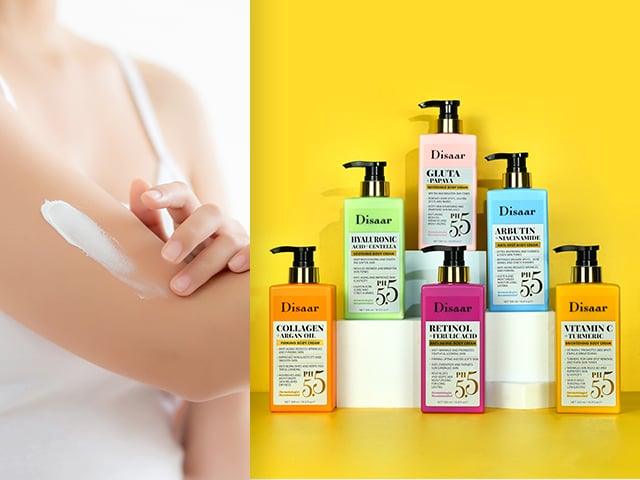
Disunie Double Essence Serum Series: Unlocking the journey of luxurious skin transformation
2025/04/17
2026/08/20
Body lotion is a core product in many body care ranges. Moisturizing remains its main use, but different formulas can also focus on brightening, nourishing, soothing, or firming-looking care.
For wholesalers, distributors, and product buyers, choosing a body lotion is not only about ingredients. Consumer demand, climate, texture, packaging, retail channel, and supply conditions all affect whether a product fits the market.
Body lotion is an emulsion-based product used to moisturize and soften the skin.
It usually contains water, humectants, emollients, oils, and other skin care ingredients. Compared with body cream, lotion is generally lighter and easier to spread over larger areas of the body.
Common characteristics include:
This makes body lotion suitable for both basic moisturizing ranges and more targeted body care concepts.
For buyers, texture is important. A formula that works well in one market may feel too rich or too light in another.
Both products are used for body moisturization, but they usually have different textures and market positions.
| Feature | Body Lotion | Body Cream |
|---|---|---|
| Texture | Lighter | Richer |
| Spreading | Easier to spread | Usually thicker |
| Main Use | Daily body care | More intensive moisturizing |
| Climate | Broad market use | Often suited to dry or cold conditions |
| Positioning | Daily care and targeted needs | Rich moisturizing and nourishing care |
Neither format is better for every market.
Body lotion often works well as a regular daily-use product. Body cream can be added when consumers prefer richer textures or need stronger dry-skin positioning.
For distributors, the two products can also play different roles within the same body care range rather than compete with each other.
Body lotion is already familiar to consumers, which reduces the need for heavy product education.
It can also cover several market needs through changes in formula, ingredients, fragrance, and packaging.
Dryness and daily moisturization are common body care needs across many markets.
This gives body lotion a broad consumer base and makes it suitable for supermarkets, beauty stores, pharmacies, online stores, and other retail channels.
Body lotion does not need to focus only on basic hydration.
Depending on the formula, it can be positioned around:
This allows buyers to select products according to local demand instead of treating all body lotions as the same category.
Ingredients help define the product concept and make the main benefit easier for consumers to understand.
These are common moisturizing ingredients.
They work well in products focused on:
Moisturizing formulas are usually easier to introduce because the consumer need is clear.
These ingredients are often used in brightening-focused body care.
They may be suitable for markets where consumers already look for products targeting dull-looking or uneven-looking skin.
For buyers, consumer familiarity matters. A known ingredient with a clear product purpose is often easier to position than a complex formula with no clear message.
Vitamin E and plant oils are commonly used in nourishing formulas.
These products may target:
Common ingredient directions can include avocado oil, almond oil, jojoba oil, shea butter, and other plant-based oils.
Aloe vera and ceramide are often used in soothing and barrier-focused products.
They can support body lotions designed for dry or uncomfortable-feeling skin.
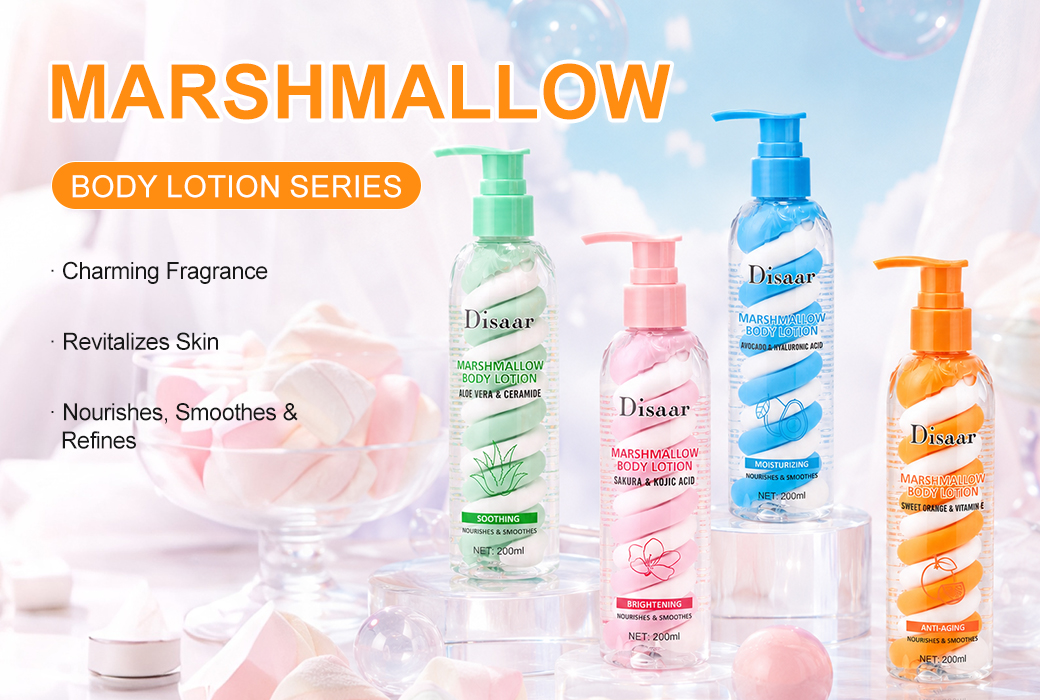
Different ingredient concepts can also be grouped into one range. For example, the Disaar 200ml Triple-Color Marshmallow Body Lotion Series uses a consistent lotion format while covering moisturizing, brightening, firming, and soothing product positions.
This is one way to expand a body lotion range without changing the basic product format.
Apply for Disaar Brand Distribution
There is no single body lotion formula that fits every consumer group.
For distributors and buyers, product selection should start with the main demand in the target market.
| Consumer Need | Ingredient Direction | Product Positioning |
|---|---|---|
| Daily hydration | Hyaluronic Acid, Glycerin | Moisturizing |
| Dull-looking skin | Vitamin C, Niacinamide, Kojic Acid | Brightening |
| Dry or rough-feeling skin | Vitamin E, plant oils | Nourishing |
| Mature-looking skin | Vitamin E, Retinol concepts | Smoothing / firming-looking care |
| Dry or uncomfortable-feeling skin | Aloe Vera, Ceramide | Soothing / barrier care |
A distributor entering a new market does not always need many formulas at the beginning.
It may be more practical to start with products that address the strongest local needs, collect sales feedback, and then expand the range.
For example, a market with strong demand for basic daily care may start with moisturizing products. A market where brightening body care is already established may support more ingredient-led formulas.
The goal is to match existing demand, not simply add more SKUs.
Formula alone does not determine market fit.
Climate, consumer preferences, retail channel, and price positioning should also be considered.
In dry or colder markets, consumers may place more importance on:
Samples are useful for checking whether the texture matches the expected local preference.
Consumers in different markets may focus on different features, such as:
These preferences should affect product selection.
A product concept that is already familiar to consumers can usually be introduced more easily than one that requires extensive explanation.
Different channels can also require different product positions.
Supermarkets may favor simple benefits, familiar ingredients, practical packaging, and clear price points.
Beauty stores can support more ingredient-focused products and stronger visual differentiation.
E-commerce and social commerce may benefit from products whose packaging and main concept are easy to show through images and short videos.
This is where packaging can become part of the purchasing decision.
The Disaar Marshmallow Body Lotion Series, for example, uses a transparent 200ml pump bottle with a visible triple-color lotion design. The range keeps a consistent packaging format while using different formulas and product concepts.
For distributors, a consistent visual format can make it easier to display several products together while still separating their positioning.
Price is important, but it should not be the only purchasing factor.
Before a bulk order, buyers should review the product itself and the supplier's ability to support repeat orders.
Samples can be checked for:
The texture should match the intended consumer group and climate.
For scented body lotion, fragrance should be reviewed during sampling.
The actual scent may affect how the product fits the target customer and retail position.
Buyers should check:
Packaging should work for both consumer use and the intended sales channel.
Before confirming an order, it is also useful to check:
For distributors planning repeat purchases, stable supply can be more important than choosing only by the lowest unit price.
Body lotion can be sold as a standalone product, but it can also support a wider body care portfolio.
A basic range may include:
These products cover different steps and textures within body care.
Another approach is to keep body lotion as the main format while developing several product positions:
This can help distributors cover different consumer needs while keeping the range easy to understand.
The right number of products depends on the market. A new distributor may start with a smaller selection, while an established buyer may need a broader range for different retailers or customer groups.
For private label projects, body lotion can also be adjusted through formula, texture, fragrance, ingredient concept, packaging, label, and outer carton.
Body lotion remains a useful body care category because it combines familiar consumer demand with flexible product positioning.
For wholesalers, distributors, and product buyers, the right choice depends on more than one ingredient. Consumer demand, climate, texture, retail channel, packaging, price position, and supply conditions should all be considered.
A smaller range built around clear market needs can be more effective than adding many similar products at once. The range can then expand based on sales feedback and local demand.
Talk to us about distribution or customization.