EN
EN


Disunie Double Essence Serum Series: Unlocking the journey of luxurious skin transformation
2025/04/17
2026/09/03
PDRN and Retinol can both support higher-value skincare lines, but they serve different market positions.
Retinol has a more established place in anti-aging skincare. Consumers often associate it with firming, wrinkle care and mature-skin products.
PDRN offers a different direction. It is more suitable for buyers looking for a newer repair-focused, hydration-led or premium skincare concept.
For distributors, the key question is not which ingredient is better.It is:
PDRN vs Retinol: The Main Difference
| PDRN Skincare | Retinol Skincare | |
|---|---|---|
| Main positioning | Repair-focused, hydration, premium care | Anti-aging, firming, wrinkle care |
| Market recognition | Newer ingredient concept | Established skincare active |
| Consumer education | Usually requires more explanation | Easier to communicate |
| Product-line role | Differentiation | Core anti-aging category |
| Suitable channels | Beauty stores, salons, e-commerce | Beauty stores, chains, e-commerce |
| Best for | Trend-led or premium portfolios | Established anti-aging demand |
The difference is mainly about positioning and market maturity.
PDRN can give a distributor a newer product story.
Retinol gives a distributor a familiar anti-aging story.
Choose Retinol When Anti-Aging Demand Is Already Established
Retinol is easier to position when consumers already understand ingredient-led skincare.
Its product message is direct:
Retinol → anti-aging → firming → wrinkle care
This makes it easier for distributors to explain the range to retailers and for retailers to communicate the products to consumers.
Livepro's existing product portfolio includes Retinol skincare in several formats. The catalog shows both a Retinol & Nicotinamide skincare series and broader Retinol ranges that extend beyond a single serum or cream.
This gives distributors more room to build different combinations instead of depending on one hero SKU.
Retinol is therefore more suitable when your market already has a clear mature-skin segment, retailers prefer recognizable skincare ingredients, or you want anti-aging to become a permanent category in your portfolio.
It can also work well for buyers who are entering functional anti-aging skincare for the first time.
PDRN plays a different role.
Many distributors already carry Vitamin C, Hyaluronic Acid, Niacinamide, Collagen or Retinol products. Adding another conventional anti-aging serum may create too much overlap.
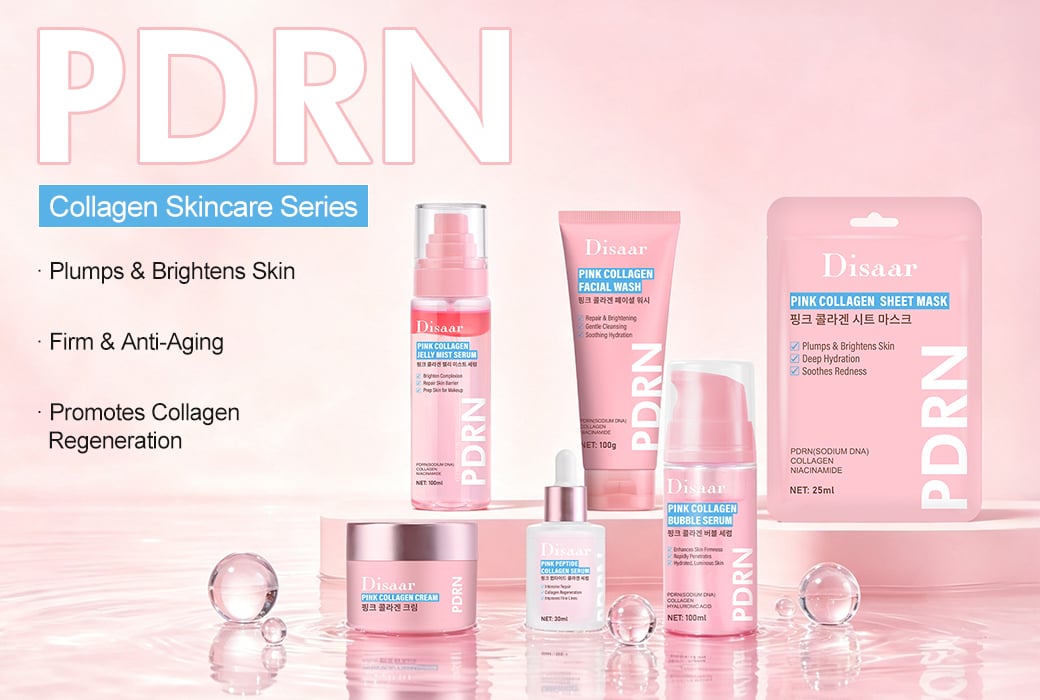
The current Disaar PDRN Pink Collagen Series includes facial wash, jelly mist serum, peptide collagen serum, sheet mask, bubble serum and cream. The series combines the PDRN concept with collagen and peptide-led positioning rather than relying on a single product format.
This makes it more suitable for distributors that want to add a focused facial skincare line rather than another large general skincare range.
PDRN may be a better fit when your customers follow new skincare ingredients, when K-beauty or ingredient-focused skincare performs well, or when your portfolio already has an established Retinol range.
In these markets, PDRN does not need to replace Retinol. It can create a separate premium or trend-led category.
The structure of the product line also affects purchasing decisions.
The current Disaar PDRN Pink Collagen Series is concentrated on facial care. It includes six products covering cleansing, serum, mask and cream formats.
This structure allows a distributor to build a compact routine without carrying too many SKUs.
For example, a new buyer could focus on a serum, cream and mask first, then add cleansing or additional serum formats according to demand.
That can be useful for beauty stores, e-commerce sellers and distributors with limited shelf space.
PDRN therefore works well when the goal is to introduce a clear, compact and differentiated facial range.
Retinol gives buyers more room to expand.
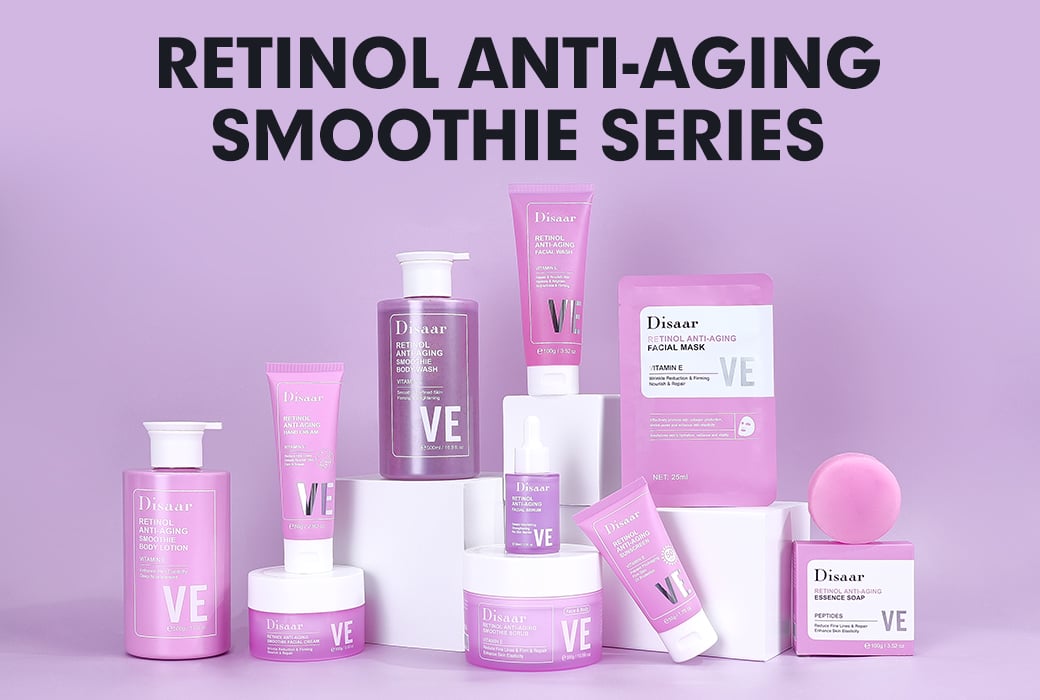
The Livepro catalog includes Retinol facial care as well as broader Retinol product formats across the skincare portfolio. Retinol appears in anti-aging skincare sets, Smoothie series products, facial serums and body-care products.
This makes Retinol easier to develop into a larger category.
A distributor can begin with facial serum and cream, then add cleanser, mask, sunscreen or body products depending on local demand.
This broader structure is useful for chain stores or distributors that want several price points and product formats under the same ingredient direction.
The basic difference is therefore:
PDRN is easier to use as a focused premium facial line.
Retinol is easier to develop into a broader anti-aging portfolio.
Channel structure can make the decision clearer.
Beauty Stores
Both product lines can work.
Retinol is easier to explain because its anti-aging positioning is already familiar.
PDRN can be useful when stores already sell Retinol and need something different to introduce to regular customers.
For specialist beauty stores with staff who can explain ingredients, PDRN may provide stronger differentiation.
E-Commerce
Both are suitable, but the content requirements are different.
Retinol can be marketed around familiar topics such as anti-aging, firming and wrinkle care.
PDRN usually needs more education before the purchase. Online sellers may need to explain the ingredient concept, product combinations and the role of each SKU.
For sellers with strong social media, product videos or ingredient-based content, this is not necessarily a disadvantage. Newer ingredient concepts can provide more topics for product education.
Salons and Professional Beauty Channels
PDRN can be easier to position as a focused premium facial range.
Serums, masks and creams fit channels where products are recommended through consultation rather than only displayed on shelves.
Retinol is still relevant, especially for anti-aging programs, but its role is more familiar and functional.
Chain Retail
Retinol may be easier to introduce.
Consumers can understand the anti-aging message quickly, while the broader product structure gives retailers more choices in format and price point.
PDRN can still enter this channel, but it may require stronger consumer education first.
The decision should also depend on what you already sell.
If your portfolio mainly contains hydration, brightening and basic skincare, Retinol can fill a clear anti-aging gap.
If you already carry Retinol, Peptides, Collagen or several mature-skin products, another similar anti-aging line may add limited value.
In that case, PDRN can create a different reason for retailers to add new products.
This portfolio approach is important because Livepro already offers ingredient-led ranges across PDRN, Retinol, Hyaluronic Acid, Niacinamide, Vitamin C, Collagen and other skincare directions.
Each range should have a different role instead of competing for the same consumer need.
A simple structure could be:
| Product Line | Portfolio Role |
|---|---|
| Retinol | Anti-aging and wrinkle care |
| PDRN | Premium repair-focused facial care |
| Hyaluronic Acid | Hydration |
| Niacinamide | Tone and blemish-care positioning |
| Vitamin C | Brightening |
This makes the full portfolio easier for retailers and consumers to understand.
Yes!
For many distributors, PDRN and Retinol do not need to compete directly.
Retinol can remain the core anti-aging line, while PDRN can serve as the newer premium facial line.
This reduces product overlap and allows the two ranges to target different buying motivations.
The main mistake is positioning both ranges with exactly the same anti-aging message.
If their roles are clearly separated, they can complement each other.
Choose Retinol first when anti-aging demand is established, consumers recognize the ingredient, you need a broader range, or your retail channels prefer products with a simple and familiar message.
Choose PDRN first when your market follows new skincare ingredients, you need more portfolio differentiation, you sell through beauty stores, salons or content-driven e-commerce, or you already carry conventional anti-aging products.
For some distributors, the better strategy is to carry both:
Retinol for established anti-aging demand.
PDRN for newer premium and repair-focused positioning.
The final combination should reflect your target buyers, sales channels, price range and local skincare demand.
Tell us your country or region and main sales channel to discuss a suitable PDRN or Retinol product mix for your market.