EN
EN


Disunie Double Essence Serum Series: Unlocking the journey of luxurious skin transformation
2025/04/17
2026/08/07
Private label acne skincare requires more than choosing a formula, adding a logo and selecting packaging.
These product ranges often combine cleansing, oil control, targeted blemish care, soothing and moisturizing. When each product is developed separately, the full routine may become too drying, too strong or difficult to use.
Claims also require careful control. Oil-control skincare, blemish care, post-acne mark care and acne treatment do not have the same meaning.
Before approving a product or supplier, buyers should review the complete product system. This includes the role of every SKU, the combined skin feel, formula and packaging compatibility, product claims, batch controls and final production version.
The key question is whether the supplier can consistently produce a clear, balanced and repeatable acne skincare range.
Buyers who have not yet selected a development model can first compare OEM, ODM and private label skincare options.
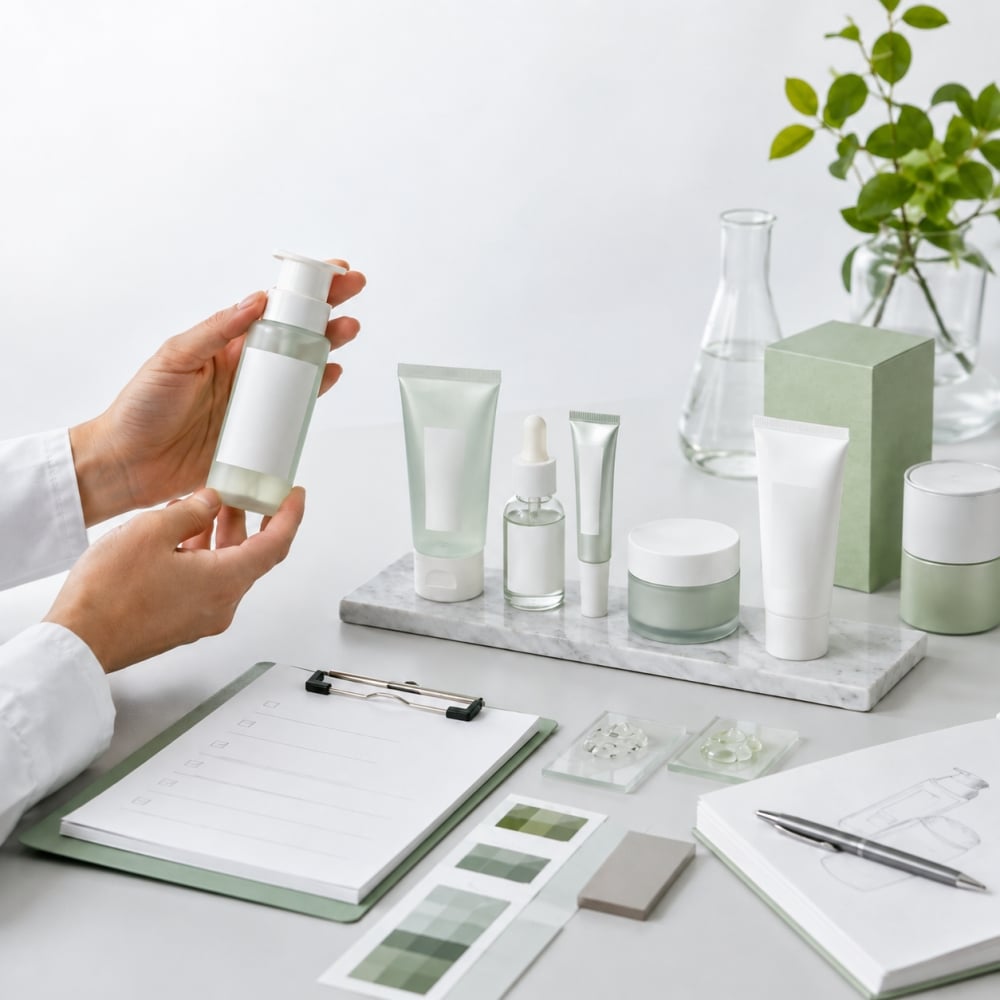
Acne skincare can cover several consumer needs. Buyers should first decide which problem the range will mainly address.
Possible directions include:
The range should not try to promise everything at once.
A series that claims to remove acne, control oil, reduce pores, repair the skin barrier, brighten the skin and remove scars will be difficult to explain. It may also be difficult to support these claims with suitable formulas.
Each product should have one clear role.
For example:
Buyers should also separate cosmetic care from treatment claims.
Terms such as acne-prone skin care, blemish care, oil-control skincare and post-acne mark care are different from acne treatment or acne scar treatment.
A cosmetic product may help cleanse excess oil, improve the appearance of blemishes, soothe acne-prone skin or support a more even-looking skin tone. Claims such as treating acne, healing scars or guaranteeing permanent results may place the product under different requirements in some markets.
The intended claims should be confirmed before the formula, product name and packaging text are approved.
Changing claims after the packaging has been printed can increase costs and delay the project.
A private label acne range should not be a group of similar products in different packages.
A practical routine may include:
| Product Role | Possible Products |
| Cleanse | Gentle facial cleanser |
| Target | Blemish serum or spot gel |
| Soothe | Repair serum or facial mask |
| Moisturize | Lightweight gel cream |
| Protect | Daily sunscreen |
| Continue care | Post-acne mark serum |
Not every project needs all six steps.
A smaller starting range may include a cleanser, targeted serum and lightweight moisturizer. Sunscreen or post-acne care can be added after the first products have been tested in the market.
Buyers should remove unnecessary repetition, such as:
Too many similar products make the range harder to explain. They can also increase inventory pressure because distributors and retailers may not know which similar SKU to prioritize.
Buyers should also avoid making every product highly active.
A strong cleanser followed by an exfoliating toner, active serum and drying spot gel may create an uncomfortable routine.
A more balanced structure is:
One targeted product supported by several gentle products.
The serum can carry the main active ingredient story. The cleanser can remain mild, while the moisturizer and sunscreen support daily use.
Buyers planning a separate aftercare step can also review our guide to post-acne marks skincare products for beauty distributors.
Buyers do not need to become cosmetic chemists, but they should understand the basic formula strategy.
They should ask the supplier:
The strongest ingredient story does not need to appear in every product.
For example, a targeted serum may use salicylic acid as its main selling point, while the cleanser remains gentle and the moisturizer focuses on hydration and soothing care.
Buyers comparing formats and ingredient combinations can also review our guide to salicylic acid skincare products for oil and blemish care.
Buyers should also check the risk of over-drying.
During sample review, confirm:
Acne-prone skin still needs hydration.
A range that only removes oil may feel effective during the first use but may be difficult for consumers to continue using.
Fragrance and texture should be checked across the full range.
Several light fragrances may become too strong when the products are layered. A serum that feels comfortable alone may become sticky under a cream and sunscreen.
Buyers should therefore review fragrance strength, alcohol-like sensation, drying time, stickiness, film formation and the weight of the moisturizer.
This is one of the most important steps in a private label acne skincare project.
Samples are often reviewed one by one, but consumers use them together.
 A simple daytime test may include: Facial cleanser → Targeted serum → Lightweight moisturizer → Sunscreen
 A nighttime test may include: Facial cleanser → Targeted serum or spot gel → Soothing serum → Moisturizer
The test should cover four areas:
Buyers should observe whether:
They should compare:
The final decision should be based on the complete routine, not only on individual samples.
A product can pass an individual sample review and still fail as part of a complete routine.
The routine should also be easy to explain. Consumers need to understand which product comes first, which is the main targeted step and which products are suitable for daytime or nighttime use.
If the routine requires a long explanation, the product structure may be too complicated.
Packaging should be approved with the actual formula.
It should not be selected only because it looks attractive.
 For facial cleansers, check whether:
For serums and spot gels, check whether:
A thick serum may not work well with a narrow dropper. A fast-drying gel may block a small opening.
For creams and sunscreens, check whether:
The final packaging should always be approved together with the final formula.
A later change to the formula or package may require new compatibility checks.
A general factory introduction is not enough. Buyers should ask how the final products will be controlled during production.
Depending on the product, the supplier may monitor:
Buyers do not need to set every technical limit themselves. However, the supplier should explain what is checked before each production batch is released.
Batch consistency is especially important for clear serums, gels, plant-extract formulas and products containing active ingredients.
Buyers should ask how the supplier controls:
The approved sample should be linked to a clear formula version and product specification.
Buyers should also confirm whether stability and packaging compatibility checks used the final formula and final packaging. A report for a similar formula may not fully represent the product that will be sold.
Retailers and consumers should understand what each product does.
Instead of naming every product “Anti-Acne,” use clearer names such as:
Claims should match the product format.
A cleanser may focus on removing excess oil and impurities.
A targeted serum may focus on improving the appearance of blemishes.
A moisturizer may focus on hydration, soothing and daily comfort.
A post-acne serum may focus on uneven-looking tone and dark-looking marks.
Using the same claim on every product makes the range less clear.
Product education should also fit the main sales channel.
 Beauty stores and pharmacy channels need simple product functions that retail staff can explain.
E-commerce sellers need clear daytime and nighttime routine graphics.
Social commerce sellers may need one hero product supported by a two-product or three-product set.
Distributors may need both individual product information and complete set materials for different downstream customers.
Before production begins, buyers and suppliers should confirm one final project version.
This should include:
Any later change to the formula, packaging or claims should create a new approval version.
This reduces the risk of producing the wrong formula, using an old packaging design or printing claims that no longer match the product.
For the wider development and production stages, buyers can review our OEM skincare manufacturing process guide.
Before placing a production order, buyers should confirm:
A private label acne skincare project should be approved as a complete system, not as a group of separate samples.
Buyers need to confirm that the product positioning is clear, every SKU has a different role and the complete routine feels balanced.
They should also confirm that the final formula works with the selected packaging, the claims match the product function and the supplier can control batch consistency.
A focused range with clear product roles is easier to test, explain and expand.
Buyers can explore our custom skincare manufacturing services for formula selection, product matching and private label development.
Livepro Beauty supports private label acne-prone skincare projects with mature formulas, selected customization options, packaging support and coordinated facial skincare products. Buyers can begin with a focused range and expand according to their market and sales channels.