EN
EN


Disunie Double Essence Serum Serie: Ontgrendelen van de reis naar luxe huidtransformatie
2025/04/17

2026/03/31
Kiezen tussen gereed op voorraad zijnde producten en OEM is niet alleen een inkoopvraag. Het is ook een vraag van timing, risico en groei.
Dit artikel vergelijkt gereed op voorraad zijnde en OEM-haarkleurendeshampoo op het gebied van snelheid, aanpasbaarheid, risico en groei. We proberen een praktische gids op te stellen voor kopers, importeurs en merkeigenaren om het juiste leveringsmodel te kiezen.
Als u nog steeds de bredere leveringsmogelijkheden voor haarkleurendeshampoo het helpt om te beginnen met het volledige categorieoverzicht voordat u een leveringsmodel kiest.
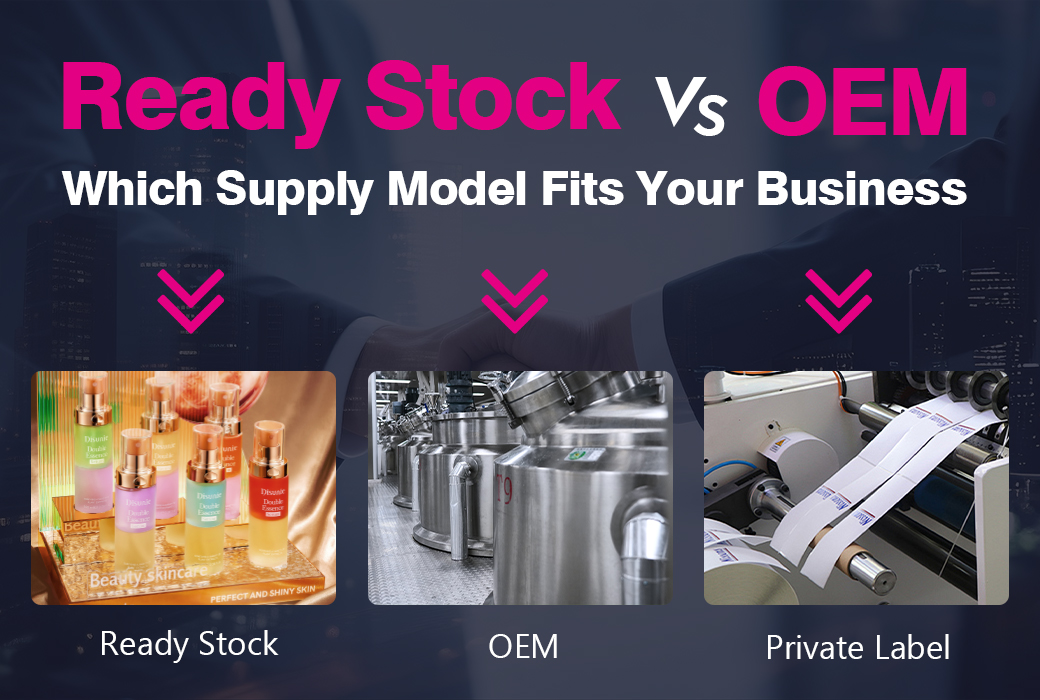
Direct leverbaar betekent dat u werkt met een bestaand, reeds ontwikkeld product. De formule is vastgesteld, de productie is gereed en verzending kan snel plaatsvinden. Bij Livepro nemen we doorgaans 1–3 dagen voor gemerkte voorraadproducten.
Dit model werkt goed voor:
OEM (Original Equipment Manufacturing) betekent dat u de fabriek vraagt om een aangepast project te bouwen op basis van uw specifieke formule, kleurdoelen, verpakking en positionering. Dit geeft u meer controle, maar voegt stappen toe: monsters, herzieningen, bevestiging van de verpakking en productieplanning. Dit duurt doorgaans 25–35 dagen of langer.
Eigen merk staat tussen beide in. U krijgt een commercieel bewezen basisproduct met uw eigen merkidentiteit. Het is sneller dan volledige OEM.
(1) U moet snel op de markt komen.
Zuid-Amerikaanse detailhandelskanalen, van Santiago tot Bogotá en Lima, bewegen snel. Een distributeur heeft mogelijk binnen weken – niet maanden – een donkere tint nodig. Kant-en-klaar voorraad levert die snelheid.
(2) U test de vraag.
Voor eerstekwadraat merkgebruikers , dan is kant-en-klaar voorraad de laagste-risico manier om te leren:
(3) Uw verkoopverhaal is al eenvoudig.
Haarkleurende shampoo werkt vaak het beste wanneer de boodschap direct is: zwarte of donkerbruine tinten, eenvoudig gebruik thuis en zichtbare grijstintdekking. Als dat al de verkooplogica is, kan een gereed voorraadaanbod voldoende zijn om te beginnen.
(4) U wilt de interne coördinatie verminderen
Minder monsteromlopen. Minder vertragingen bij de verpakking. Minder wachten op goedkeuringen. Voor veel importeurs is dit kortere traject naar lancering niet alleen een kwestie van tijd, maar ook van het behouden van de beheersbaarheid van het project.
Dit werkte daadwerkelijk voor veel kopers in een vroeg stadium: begin met een beperkt voorraadaanbod, leer welke tinten en boodschappen aanslaan, en beslis vervolgens of diepergaande aanpassingen de extra tijd waard zijn.
(1) U hebt sterker onderscheidingsvermogen nodig.
Als uw lijn een specifieker formuleverhaal nodig heeft, een duidelijkere positie op het gebied van verzorging én kleur, een bepaalde geurrichting of een nauwkeuriger overeenkomst tussen verpakking en merkbeeld, dan biedt OEM u meer ruimte om die identiteit op te bouwen.
(2) U weet al wat uw markt wil.
Als u al weet welk kleurenspectrum het beste werkt, welke claimrichting het sterkst is en via welk kanaal het product het beste verkocht kan worden, dan kan extra ontwikkelingstijd de moeite waard zijn.
(3) U bouwt langdurige merkeigendom op, niet alleen kortetermijnproductbeschikbaarheid.
Een aangepast project kan meer controle ondersteunen over hoe de lijn eruitziet, hoe deze wordt gepositioneerd en hoe eenvoudig deze kan worden nagebootst.
Veel kopers zien de keuze als ‘standaardproduct’ of ‘OEM’, maar daarmee wordt de meest praktische middelweg overgeslagen.
Private-label haarkleuringsshampoo biedt u:
Dat is vooral handig voor:
Een realistische ontwikkelingsroute voor veel inkopers:
Klaarstaande voorraad past het beste, vooral wanneer de categorie wordt toegevoegd om praktische vraag te vervullen in plaats van om diepgaande merkverhalen te vertellen.
Een eigen merk is vaak de beste keuze. Het maakt een gemerkte lancering mogelijk zonder de planning te veel uit te rekken.
U profiteert waarschijnlijk het meest van OEM. U hebt al een duidelijke marktpositie, interne besluitvorming en inzicht in welke formule- of verpakkingsverschillen de moeite waard zijn om te ontwikkelen.
Als u voor het eerst haarverfshampoo introduceert, met name in markten als Chili, Peru of Colombia, leert een snelle voorraadlancering u meer dan een langdurig aangepast project. Test eerst de respons van de verkoopkanalen en breid daarna uit.
| Factor | Direct leverbaar | Eigen merk | OEM |
| Tijd tot lancering | 1–3 dagen | 15–25 dagen | 25–35+ dagen |
| MOQ Flexibiliteit | 1 doos | 3000-5000 stuks | 5000 stuks |
| Verpakkingscontrole | Beperkt | Sterk | Volledig |
| Formulecontrole | Geen |
Voorraadformule | Volledig |
| Merkbezit | Laag | Hoog | Hoogste |
| Voorraadrisk | Laag | Middelmatig | Hogere initiële kosten |
(1) OEM kiezen voordat de vraag is bewezen.
Een volledig op maat gemaakt project is duur om te testen wanneer dat te vroeg gebeurt.
(2) Kiezen voor standaardproducten terwijl het merk duidelijk sterker gedifferentieerd moet zijn.
Als uw verpakking er generiek uitziet, is het moeilijker om op te vallen in een overvolle schap.
(3) Beginnen met te veel SKU’s.
Het beperken van uw eerste assortiment vermindert onnodig risico, vooral wanneer de vraag onzeker is.
(4) Alleen focussen op de stukprijs.
Een goedkoper eerste bestelbedrag is niet altijd beter als het product moeilijker uit te leggen is, gemakkelijker te vervangen of langzamer te schalen is.
(5) Het effect van verpakking onderschatten.
Verpakkingswijzigingen kunnen een snelle projectuitvoering stilletjes omzetten in een trage.
De overstap is meestal zinvol wanneer:
Dat is het keerpunt.
Klaarstaande voorraad helpt u leren.
OEM helpt u meer eigendom te nemen van wat u hebt geleerd.
Klaarstaande voorraad is niet de zwakke optie.
OEM is niet automatisch de slimme optie.
Private label is vaak het meest praktische pad tussen beide.
Het beste leveringsmodel hangt af van waar uw bedrijf zich momenteel bevindt — en waar u over 12 maanden wilt staan.
Als u snelheid, lagere complexiteit en een snelle test van de praktische vraag nodig hebt → Klaar op voorraad
Als u sterker merkeigendom nodig hebt zonder de volledige ontwikkelingslast → Eigen merk
Als u al weet wat uw markt wil en u klaar bent om een beter te verdedigen productlijn op te bouwen → OEM
Hulp nodig bij kiezen?
Als u nog twijfelt tussen klaar op voorraad, eigen merk en OEM, dan is de volgende nuttige stap om uw lanceringstijd, doelkanaal en eerste-SKU-plan te vergelijken voordat u een keuze maakt.