EN
EN



Disunie Double Essence Serum Series: Unlocking the journey of luxurious skin transformation
2025/04/17
2026/10/13
Brightening serum and vitamin C serum are not necessarily two different types of skincare products. A brightening serum focuses on skin concerns such as dullness and uneven-looking skin tone, while a vitamin C serum highlights a specific ingredient and its skincare benefits.
A vitamin C serum can also be a brightening serum, but not every brightening serum contains vitamin C.
For skincare distributors, wholesalers, and private-label brands, understanding this distinction helps with product selection, market positioning, and building a facial serum range without unnecessary SKU overlap.
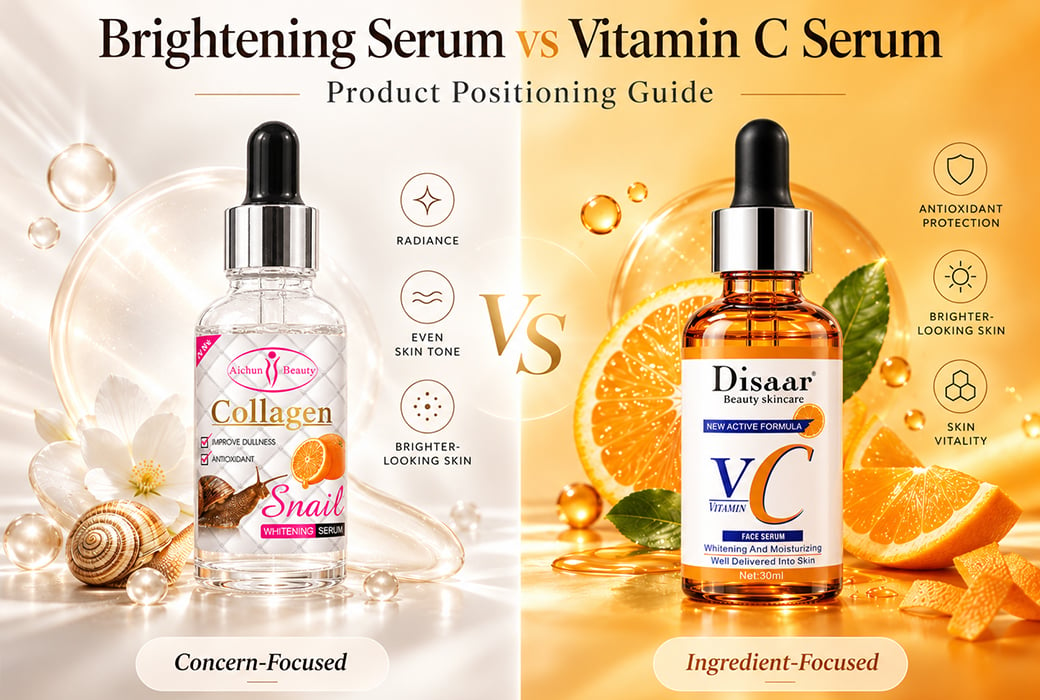
A brightening serum is positioned around its intended skincare benefits, while a vitamin C serum is positioned around its featured ingredient. Both can target similar skin concerns, but their main selling points may differ.
| Comparison | Brightening Serum | Vitamin C Serum |
|---|---|---|
| Main positioning | Skin concerns and visible benefits | Featured ingredient and its benefits |
| Skincare focus | Dullness, uneven-looking skin tone, radiance | Brightening, antioxidant care |
| Common ingredients | Niacinamide, vitamin C, alpha arbutin | Vitamin C and supporting ingredients |
| Differentiation | Target skin concerns and formula benefits | Vitamin C form and formulation |
| Product line role | Concern-focused skincare | Ingredient-focused skincare |
The two categories overlap. A vitamin C brightening serum combines both approaches by highlighting vitamin C while targeting dullness and uneven-looking skin tone.
For buyers, the distinction is mainly about how the product is formulated, presented, and positioned within a skincare range, rather than the product name alone.
Brightening serums can use different ingredients depending on the intended product benefits and target consumers.
Common ingredient options include:
Supporting ingredients such as hyaluronic acid and glycerin provide hydration and can improve the skin feel of a serum. They complement the formulation rather than serving as primary brightening ingredients.
For vitamin C serums, the selected vitamin C form is particularly important. L-ascorbic acid and vitamin C derivatives have different formulation requirements, including pH, stability, and ingredient compatibility.
Packaging also affects product stability. Some vitamin C formulations are sensitive to light and oxygen, making suitable containers and stability testing important.
A brightening serum containing multiple active ingredients is not automatically more effective than a vitamin C serum. Finished-product performance depends on the complete formulation, ingredient compatibility, and supporting test results.
For private-label development, ingredient selection should follow the intended product benefits, target price range, and market requirements rather than simply increasing the number of featured actives.
For distributors and skincare brands, the choice depends on consumer purchasing habits, ingredient awareness, and existing product assortments.
A brightening serum may be suitable when consumers primarily look for products addressing dull-looking skin, dark spots, or uneven-looking skin tone rather than searching for a specific ingredient.
This positioning allows brands to offer different formulations under one skincare concern, providing flexibility in ingredient selection and pricing.
For example, the Aichun Beauty 30ml Snail Collagen Whitening Serum Series includes Carrot, Papaya, Turmeric, and Vitamin C variants.
The series demonstrates how different ingredient concepts, including vitamin C, can be organized within a broader brightening skincare range.
A vitamin C serum may be suitable when consumers recognize vitamin C and actively search for skincare products featuring this ingredient.
Its ingredient identity provides a clear product message for online listings, retail displays, and customer education.
For example, the Disaar Vitamin C Face Serum with Hyaluronic Acid combines a vitamin C concept with brightening and hydration positioning.
Unlike a broader brightening series with multiple ingredient options, this product uses vitamin C as its main ingredient identity.
Both approaches can serve similar skincare needs. The difference is how consumers identify and compare the products.
Product positioning should reflect how consumers discover and select skincare products.
In retail environments where shoppers primarily compare products by skin concern, a brightening serum with clearly communicated benefits may be easier to position.
For online stores or beauty retailers where customers frequently search for specific skincare ingredients, vitamin C serum can offer a recognizable product identity.
However, these are not fixed rules. Distributors should review local sales experience, retailer feedback, and consumer demand before selecting products.
Distributors can carry both brightening serums and vitamin C serums when the products serve different customer needs.
A concern-focused brightening serum may appeal to shoppers looking for a more even-looking complexion, while an ingredient-focused vitamin C serum may attract consumers already familiar with vitamin C skincare.
However, stocking both does not always create a stronger product range.
If two serums offer similar ingredients, benefits, textures, packaging, and retail prices, they may compete for the same customers rather than expand sales opportunities.
Before introducing another SKU, buyers should compare:
For distributors starting with a limited serum assortment, one well-positioned product may be more practical than two similar products.
Carrying both makes more sense when each serum has a distinct role within the product line and meets identifiable customer demand.
There is no universal winner between brightening serum and vitamin C serum. The better choice depends on consumer demand, product differentiation, and the intended role of each SKU.
Choose a brightening serum when consumers primarily shop by skin concern and the product line needs flexibility in ingredients and formulation.
Choose a vitamin C serum when ingredient recognition is important to the target market and a vitamin C-focused product fits the existing range.
Consider a vitamin C brightening serum when both ingredient recognition and brightening benefits are relevant to consumers. It can combine both positioning approaches without requiring separate products.
Before wholesale ordering or private-label development, buyers should also review the ingredient list, product texture, packaging compatibility, available testing information, and purchasing requirements. For vitamin C formulas, ingredient form and stability deserve particular attention.
The goal is not simply to offer more facial serums, but to select products that meet market demand without unnecessary duplication.
Explore Livepro's wholesale facial serum collection or discuss private-label face serum development to find suitable products for your market.