Dark spots (hyperpigmentation), dehydration, and UV damage are three key skin concerns that any effective skincare line must address, especially in Latin America’s climate and diverse skin tones.
This page is written from a skin care formulation and manufacturing perspective. From a manufacturer’s view, the winning strategy is not “add more actives.” It’s building formulas by area. Because each area has different constraints: tolerance, friction, sweat and texture preference. And custom formulas often require a longer formulation development timeline, especially when targeting multiple markets.
This guide explains how to design a practical product lineup (and the formulation logic behind it) so your brand can deliver visible results while staying stable, scalable, and market ready.
Built for: high-UV markets, humid heat, multi-area routines
Fit notes: best for brands needing 3–4 core SKUs that layer well and are easy to reapply
(1) Start with an "Area Map" (why one formula won't fit all)
Think in three area types:
| A. High-exposure zones: face, neck, hands |
B. High-friction / sensitive zones: underarms, inner thighs, bikini line, elbows |
C. Large-surface zones: body |
- Highest UV load and most visible pigmentation
- Needs daily, comfortable textures to support consistent use
- Must layer well with other products
|
- Friction + heat + occlusion increase irritation risk
- Irritation can trigger post-inflammatory hyperpigmentation (PIH), making the problem worse
- Requires gentler brightening + stronger barrier support
|
- High product usage volume means cost and texture matter
- People apply less and reapply less often
- Needs "fast spread + durable feel" rather than an ultra-luxury texture
|
If a brand offers "dark spots + hydration + sun protection" solution by different zones, it will be more competitive in the market.
(2) Dark spots module: build for results without irritation
The key is how to combine them safely and choose formats that make sense by area.
What works (and why)
- Use a "mechanism mix," not a single hero active:
- Tone-evening + barrier-friendly: niacinamide
- Pigment pathway support: tranexamic acid, alpha arbutin, licorice derivatives
- Cell turnover support: gentle retinoid options (face-focused), or mild exfoliating acids where appropriate
- Antioxidant support: stable vitamin C derivatives, vitamin E, ferulic-style blends
Area-based guardrails (what brands often miss)
Face:
- Prioritize low pilling, quick absorbing serums or emulsions
- Avoid stacking too many exfoliants with strong retinoids in one SKU (it increases irritation and returns)
Friction zones:
- Choose gentle brightening + anti-inflammatory support first
- Use a cream base with barrier helpers (panthenol, ceramides, soothing agents)
- Keep fragrance low or optional
Body:
- Use scalable brightening systems that can work in larger pack sizes
- Focus on "consistency of use" over aggressive strength, because people won't use a harsh body brightener daily
Manufacturer tip: don't ignore stability and oxidation
Vitamin C is very effective, but in warm climates, unsuitable formulations/packaging can lead to its rapid oxidation. If you want to use vitamin C as an ingredient, please use stable derivatives and protective packaging (opaque tubes, airless pumps), and verify its efficacy through stability testing.
(3) Hydration module: It's the foundation of healthy skin.
Hydration isn't one ingredient. It’s a system that affects glow, irritation risk, and even pigmentation outcomes.
Build hydration in three layers
- Humectants (pull water in): glycerin, hyaluronic acid, betaine
- Emollients (soften): lightweight esters, squalane-based oils, skin feel enhancers
- Barrier helpers (keep water in): ceramides, panthenol, barrier-support polymer
Area-based hydration logic
Face (especially humid heat):
- Gel cream or light lotion textures
- Keep it breathable; support makeup layering
- Hydration should feel "fresh," not greasy
Body:
- Faster spreadability, less tack
- "Long wear comfort" matters more than luxury finish
- Consider family size and pump packaging for usability
Friction zones:
- Richer, cushioning creams that reduce chafing discomfort
- Repairing the skin barrier first to reduce hyperpigmentation caused by irritation.
For Example
In coastal humid cities, users often don't like heavy creams because they feel sticky and attract dust/sand. In air-conditioned indoor life or high altitude regions, skin can feel tight and dry even if it looks oily. This is why brands often need at least two hydration textures (light face; durable body) to cover face and body care.
(4) Sun protection module: the non-negotiable that makes brightening work
Without daily sun protection, the effectiveness of spot-removing products will be greatly reduced. Daily broad spectrum sunscreen is not just for prevention of burns, but also to curb premature aging and hyperpigmentation.
Formulation priorities by area
Face SPF:
- Must layer well (no pilling)
- Should feel lightweight and comfortable for daily use
- Optional tint can boost repeat use and improve tone appearance
Body SPF:
- Durable, fast-spreading textures
- Consider water resistance for outdoor and beach lifestyles
- Non-sticky finish improves compliance
Hands/neck:
- Often forgotten areas; consider promoting a "top-up"format (light lotion, quick-dry)
Manufacturer tip: build "easy to reapply" sunscreens
Consumers don't reapply because of feel, not because of education. If you want real-world performance, optimize:
- dry-down time
- transfer resistance
- low white cast (especially important for diverse skin tones)
- minimal eye stinging for face SPF
- Compatibility screening (pH window + viscosity drift)
- Accelerated stability (heat/cold cycle + packaging compatibility)
- Claim support: SPF/UVA testing route, water resistance protocol, documentation set (INCI + COA)
In addition, please ensure that the product's claimed efficacy (broad-spectrum sun protection, water resistance, and SPF value) aligns with the testing requirements for the target market.
(5) The “Area by Area” SKU blueprint (simple lineup that covers real demand)
These skin care products are designed as a small, scalable lineup. A practical lineup for brand owners:
Face Spot Correcting Serum (daily, low irritation)
- Brightening system: niacinamide + tranexamic/alpha arbutin style support
- Texture: fast absorbing serum or light emulsion
- Goal: steady improvement without triggering irritation
- Decision specs: irritation ceiling / layering compatibility
Daily Face SPF 50 (hydrating, no pilling)
- Lightweight feel with strong UV protection
- Optional tinted version for broader market appeal
- Goal: high daily compliance
- Decision specs: finish / white cast control / eye sting control
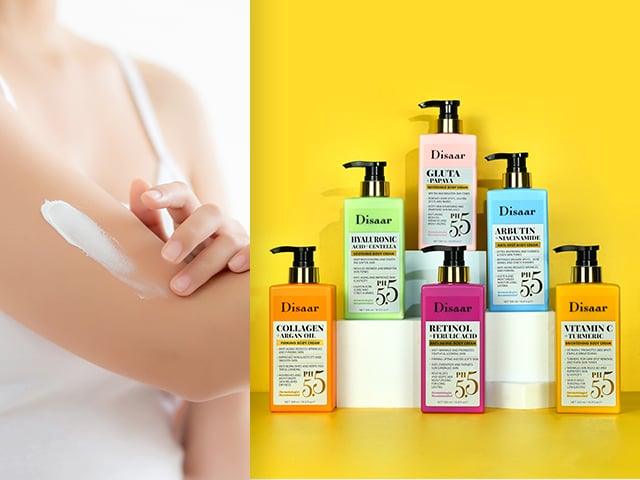
Body Brightening Lotion (large pack, scalable)
- Gentle brightening + durable hydration
- Texture: easy spread, fast absorption
- Goal: consistent usage across a large area
- Decision specs: spreadability / tack / pump pack
Friction-Zone Brightening Barrier Cream (underarms / bikini line / inner thighs)
- Barrier-first base with gentle brightening
- Low-irritation positioning
- Goal: reduce friction discomfort and prevent PIH-driven darkening
- Decision specs: barrier-first / low fragrance / anti-chafe feel
This lineup lets you tell a clear story: "We solve the same concerns differently because different areas behave differently."
(6) What brands usually get wrong (and what we do as a manufacturer)
- Over-stacking actives that cause irritation and rebound pigmentation
- Ignoring feel and pilling, leading to poor compliance
- Using unstable actives without protective packaging, causing oxidation and color/odor changes
- Treating sunscreen as a separate product, rather than the anchor that makes brightening work
- Skipping scale up reality (a lab texture that can’t be reproduced in bulk)
This is where a custom skin care manufacturer adds value: we develop formulas that can withstand the rigors of actual use and logistics.
Closing: what to send your manufacturer to move faster
To accelerate development and reduce reformulation loops, share three inputs below:
- Target areas (face / body / friction zones)
- Priority outcome (dark spots correction vs hydration comfort vs sport-level water resistance)
- Target markets and channels (because compliance requirements and texture expectations vary)
When these inputs are clear, the formulation process becomes more predictable, and your SKU lineup becomes easier to position, test, and scale.
What you'll receive from an experienced OEM partner
Livepro beauty as a skincare manufacturer, has more than 20 years industry experience. A strong manufacturer should not make the formula only. We also provide:
- Lab samples with texture options (so you can choose “fresh face feel” vs “durable body feel”)
- Stability and packaging compatibility checks (especially for oxidation-sensitive brightening systems)
- Claim-aligned testing guidance for your target markets (broad-spectrum, water resistance, SPF value)
If you’re planning a brightening + hydration + sun protection lineup, send us your target areas, positioning, and markets. We’ll recommend a starter SKU set and the fastest sampling path. To understand where formulation fits in brand scaling, see our skin care OEM manufacturing guide.
 EN
EN