EN
EN


Disunie Double Essence Serum Series: Unlocking the journey of luxurious skin transformation
2025/04/17
2026/07/31
Peeling oil is a targeted body care product used for rough skin, dead skin buildup and uneven-looking skin texture. It is often applied to areas such as the elbows, knees, knuckles, feet and heels.
For importers, distributors and beauty wholesalers looking for peeling oil wholesale products, choosing the right product involves more than comparing prices or ingredient names.
Product strength, application area, packaging, instructions and market positioning can all affect sales and customer satisfaction.
This guide explains what peeling oil is, how to choose the right product for your market, what to check before buying and how to evaluate a peeling oil supplier.
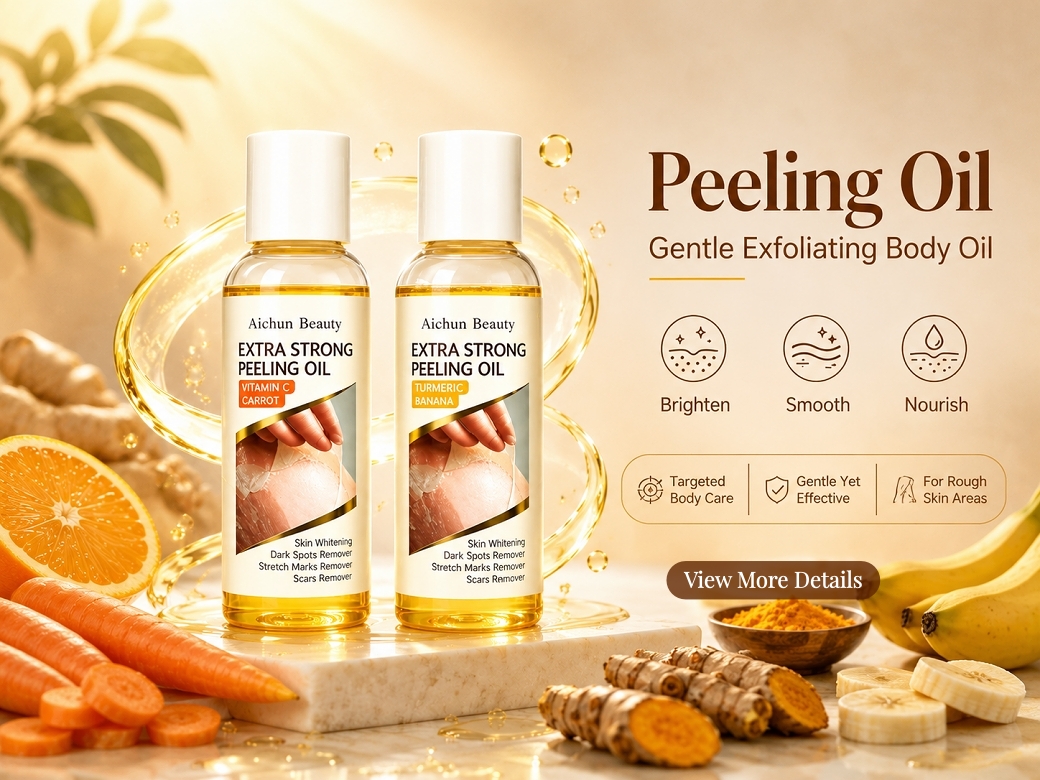
Peeling oil is a body exfoliating product designed to help remove dead skin cells and improve the appearance of rough skin.
It is usually used as a periodic treatment rather than a daily moisturizing product. The formula, strength and instructions may vary between products, so buyers should always check how the product is intended to be used.
Peeling oil is commonly used for:
The product should not be promoted with unrealistic claims such as permanent whitening, instant skin transformation or complete pigmentation removal.
Clear and controlled claims are easier for consumers to understand and safer for long-term market development.
Peeling oil and regular body oil serve different purposes.
Regular body oil is mainly used to moisturize, soften and reduce dryness. It can often be used as part of a daily body care routine.
Peeling oil focuses on exfoliation and rough skin care. It usually requires a specific application time, frequency and follow-up routine.
| Item | Peeling Oil | Regular Body Oil |
| Main purpose | Exfoliation and rough skin care | Moisturizing and softening |
| Frequency | Periodic use or as directed | Often suitable for daily use |
| Application area | Body or targeted rough areas | General body use |
| Instructions | Requires clear usage limits | Usually has fewer restrictions |
Peeling oil is one of several body exfoliating formats.
A body scrub uses physical particles to remove dead skin during bathing. A peeling gel is usually massaged onto the skin and may form visible residue. An exfoliating lotion has a creamier texture and may be easier to spread over larger areas.
Peeling oil normally has a more fluid texture and is often positioned for targeted or periodic care.
The best format depends on local consumer habits, product education and sales channels. Buyers can also explore other wholesale body care products before deciding which exfoliating format fits their market.
Peeling oil products can be positioned in different ways. Buyers should first decide which type fits their target market.
Body peeling oil is the most common product direction.
It is designed for rough body areas and general body exfoliating care. This type is easier to explain in beauty stores, wholesale channels and online shops.
The packaging should clearly state that the product is for body use.
Targeted-area peeling oil is positioned for specific areas, such as:
This positioning can make the product easier to understand. Consumers know where to apply it and what problem it is designed to address.
Targeted products can also work well in online channels because the application area can be shown clearly in images and videos.
Gentle peeling oil is suitable for markets where consumers prefer simple and lower-risk body care routines.
It may be easier to introduce to first-time users or general beauty retail channels.
Buyers should still confirm the recommended frequency, application time and suitable body areas. The word “gentle” should be supported by the actual formula and usage instructions.
Intensive peeling oil is designed for stronger or more concentrated exfoliating care.
This type requires more complete product information, including:
A stronger product is not always a better product. It must match the target customer, sales channel and local regulations.
A peeling oil may perform well in one market but not fit another. Importers and distributors should choose products based on real consumer needs and sales conditions.
 Identify the Main Consumer Need
Before buying, define the main problem the product should address.
Common needs include:
A clear consumer need makes product positioning, packaging and sales communication easier.
Define a Clear Product PositionA peeling oil can be positioned as:
Avoid adding too many claims to one product. A simple and clear position is easier for distributors, retailers and consumers to understand.
Match the Product with the Sales ChannelDifferent channels have different requirements.
| Sales channel | Main buying focus |
| Beauty stores | Clear application area and simple packaging |
| E-commerce | Strong visual explanation and easy usage steps |
| General wholesale | Direct product name and low sales training cost |
| Professional beauty channels | Complete instructions and warnings |
| Private label brands | Flexible packaging, labels and positioning |
A product sold online may need stronger visual content. A product sold through wholesale stores may need simpler packaging and faster product understanding.
Check Local Claims and Label RequirementsClaims such as whitening, bleaching, dark spot removal, pigmentation removal, skin renewal and peeling may be regulated differently in different markets.
Buyers should not directly copy claims used in another country.
The label and marketing language should match local cosmetic regulations and the actual product function.
Importers should evaluate the product carefully before confirming a bulk order.
 Formula Positioning
Ask the supplier to explain:
The supplier should be able to explain the product clearly without relying only on strong marketing claims.
 Product Strength
Confirm whether the product is gentle, regular or intensive.
Important questions include:
These details should be clear before the product enters the market.
 Target Application Areas
The label should clearly state where the product can be used.
Possible areas include:
A body peeling oil should not be promoted as a facial product unless the formula and test information support facial use.
 Texture and User Experience
Samples should be tested before ordering.
Buyers should check:
A good formula still needs practical packaging and a clear user experience.
 Packaging and Capacity
Packaging affects both product safety and retail positioning.
Check:
 Instructions and Warnings
The product information should include:
Clear instructions reduce misuse and customer complaints.
 Samples and Product Documents
Before placing an order, buyers may request:
The exact document requirements depend on the destination country.
Buyers can choose between ready stock peeling oil wholesale and private label peeling oil development.
Ready stock is suitable for:
Buyers can request information about wholesale quantities, samples, carton details, packaging, lead time, product documents and export requirements.
Ready stock allows buyers to enter the market faster and test sales before investing in a custom product.
Importers and distributors can also browse more ready stock skincare products for their existing wholesale channels.
Private label is suitable for buyers who need:
Private label discussions may include:
Not every option is suitable for every order quantity. Buyers should confirm the customization scope, MOQ and lead time with the supplier.
Private label is more suitable for buyers who need their own brand, packaging changes, or a different product position.
Businesses planning to create their own-brand products can learn more about our private-label peeling oil manufacturing services.
A reliable peeling oil supplier should provide more than a low price.
Product KnowledgeThe supplier should be able to:
Samples and DocumentationThe supplier should provide relevant samples and product information before a major order.
Documents may include:
Manufacturing and Quality StabilityImporters should check whether the supplier can maintain stable quality across different batches.
Important points include:
Wholesale and Customization CapabilityA suitable supplier should clearly state whether it supports:
MOQ, Lead Time and CommunicationBefore ordering, confirm:
Clear communication is especially important for private label projects.
Peeling oil buyers should not make purchasing decisions based only on price, ingredient names or strong marketing claims.
Importers and distributors need to evaluate product strength, application areas, instructions, packaging, labels and sales channels.
Ready stock peeling oil is suitable for faster market testing. Private label is more suitable for buyers who need their own brand, packaging changes or a different product position.
A reliable peeling oil supplier should provide clear product information, samples, documents and stable supply support.
Looking for Peeling Oil?
Choose from our ready-stock peeling oil products or develop a private-label solution for your market.
Contact us for samples, wholesale details, packaging options and MOQ.
Send us your requirements to get started.