EN
EN


Disunie Double Essence Serum Serie: Ontgrendelen van de reis naar luxe huidtransformatie
2025/04/17

2026/03/19
Watercress Bubble Dye-shampoo trekt aandacht omdat het drie belangrijke kenmerken in één product combineert: eenvoudige toepassing, zichtbare grijze haarkleuring en plantaardige ingrediënten. Deze producten zijn voornamelijk gericht op bubbels- of schuimtoepassing, snelle kleuring, zwarte en donkerbruine tinten, een boodschap zonder ammoniak en levering als OEM- of private-labelproduct.
Voor kopers van haarverzorgingsproducten is de werkelijke waarde als volgt:
Daarom krijgt deze productcategorie serieuze aandacht bij kopers.
Eigenlijk is het een haarkleuringproduct op shampoo-basis dat wordt toegepast in een schuim- of microbelformat. Het belletjesformaat verandert de perceptie van het product. Een standaard haarkleuringsshampoo kan nog steeds vooral als een kleurproduct worden ervaren. Vanuit consumentenoogpunt voelt het belletjesformaat eenvoudiger, lichter en minder intimiderend, wat direct leidt tot lagere aankoopbarrières en hogere proefgebruikspercentages. Het spreekt eindconsumenten aan die zichtbare resultaten willen zonder de complexiteit van een traditionele kleurringroutine.
Het waterkers geeft het product een frissere en zachtere identiteit. In plaats van te klinken als een te chemisch of te technisch product, kan de formule worden gepresenteerd als een praktisch kleurproduct met een zorggerichte imago.
Als u meer wilt weten over deze categorie, helpt onze gids over haarkleuringsshampoo voor merken uitleggen hoe verschillende producttypes, koopvoorkeuren van kopers en leveropties op elkaar aansluiten.
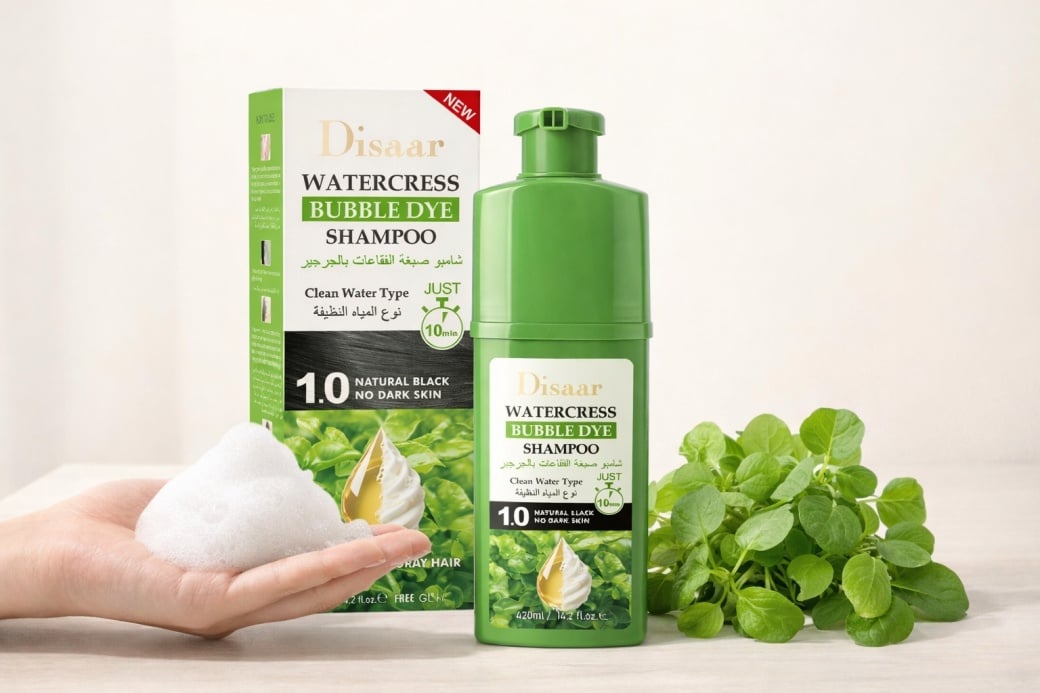
Een reden is dat het gemakkelijker is om te demonstreren dan een traditioneler kleurstelsel. Schuim is visueel duidelijk. Het gebruiksscenario is eenvoudig aan te tonen.
Een andere reden is het retailverhaal. Watercress Bubble Dye-shampoo wordt vaak aangeboden in zwart en donkerbruin. Dit zijn praktische tinten die bijdragen aan conversie naar verkoop tijdens de initiële lancering. Veel leveranciers van haarshampoos koppelen het formaat ook direct aan het bedekken van grijs haar, wat merken een direct, makkelijk te begrijpen voordeel biedt.
De derde reden is dat het een nuttige tussenpositie inneemt. Het voelt nieuwer aan dan een standaard kleurshampoo, maar blijft toch nauw afgestemd op de werkelijke behoeften van consumenten.
Dit is wat in veel praktische lanceringen daadwerkelijk heeft gewerkt: kies een formaat dat fris overkomt, maar zorg ervoor dat het kernvoordeel nog steeds duidelijk is. Het bedekken van grijs haar, de eenvoud van donkere tinten en het gemakkelijk thuisgebruik zijn eenvoudig herhaaldelijk te verkopen.
Ten eerste wordt een standaard haarkleuringsshampoo meestal verkocht als een product dat chemische stoffen bevat. Een bubbleshampoo voor haarkleuring wordt verkocht als een eenvoudigere, toegankelijkere ervaring. De bubbel- of schuimstructuur maakt het product schoner en eenvoudiger in gebruik.
Ten tweede is het productimage. De Watercress Bubbleshampoo voor haarkleuring biedt botanische verzorging, zachtere formules en schoonheid op basis van gemak. Merkhouder kunnen het product daarom positioneren voor thuisgebruik, praktische grijze-haarbedekking en dagelijks kleuronderhoud.
Als uw team nog steeds bredere formaatkeuzes vergeleekt, helpt het ook om te bekijken haarkleurende shampoo versus klassieke haarkleurstof voordat u beslist welke productlijn het beste bij uw markt past.
Een koper moet zich afvragen:
De meeste actuele productpagina's op dit gebied richten zich op zwart en donkerbruin. Voor veel merken is dat een goede uitgangspositie.
Het belopvormige formaat helpt alleen als de werkelijke gebruikservaring de belofte ondersteunt. Kopers zullen vergelijken:
Als het product wordt verkocht op basis van gemak, moet het gehele systeem ook als gemakkelijk ervaren worden.
Kopers moeten beoordelen of de volledige formule een samenhangend verhaal vertelt. Voelt het meer botanisch, meer verzorgingsgericht, toegankelijker of eerder praktisch voor de massamarkt?
Geur speelt een sleutelrol in de gebruikerservaring, vooral voor een product dat wordt gepositioneerd als zacht of plantaardig. Een frisse, kruidige geur, zoals waterkers, kan de natuurlijke positionering versterken en de waargenomen waarde verbeteren.
Verpakking beïnvloedt of het product gemakkelijk door het distributiekanaal kan worden gevoerd:
Als u deze categorie voor de eerste keer opbouwt, kan onze gids over haarverfshampoo voor nieuwe productlijnen u helpen beslissen wat u moet vergelijken voordat u zich inzet voor een uitgebreider lanceringplan.
Waterkers Bubble Dye Shampoo past niet op dezelfde manier bij elk merk. Dit hangt meestal af van het distributiekanaal en de positionering.
Het product is eenvoudig te begrijpen, eenvoudig te demonstreren en eenvoudig te positioneren rond praktische behoeften zoals het bedekken van grijs haar en het vernieuwen van donkere tinten.
Als uw merk al spreekt met een zachtere, meer zorggerichte toon, kan het waterkers-verhaal dat goed ondersteunen. Veel huidige productpagina’s gebruiken ook ammoniakvrije terminologie rond dit soort producten, waardoor de zachter gepositioneerde route nog commercieel bruikbaarder wordt.
Als dat uw richting is, bekijkt ons artikel over ammoniakvrije haarkleuringsshampoo wat merkkopers daadwerkelijk moeten vergelijken voordat ze kiezen voor een zachter gepositioneerde formule.

Direct leverbaar op voorraad werkt het beste wanneer snelheid belangrijk is. Het is nuttig voor distributeurs die de vraag willen testen, merken die snel in deze categorie willen instappen, of importeurs die eerst een lage-complexiteit test willen uitvoeren voordat ze dieper ingaan.
Een eigen merk is zinvol als u meer controle wilt over uw merk zonder helemaal opnieuw te hoeven beginnen. Voor een product als Watercress Bubble Dye Shampoo kan dit een praktische route zijn, omdat het formaat al een sterke commerciële identiteit heeft. Verpakking, nadruk op kleurtonen en merkverhaal kunnen veel van het differentiatiewerk doen.
OEM of uitgebreidere aanpassing is beter als u het formulaverhaal, geurprofiel, kleurresultaat of verpakkingssysteem op een beter afbakenbare manier wilt verfijnen. Het vergt meer inspanning, maar kan bestaande merken een sterker langetermijnpositie geven.
Als u deze routes afweegt, kan onze vergelijking van klaar op voorraad versus OEM haarverfshampoo u helpen beslissen welk leveringsmodel het beste bij uw bedrijfsfase past. En als u dichter bij personalisatie komt, kan onze gids over private-label haarkleuringsshampoo de formule, tinten, verpakking en MOQ uitgebreider.
Een veelgemaakte fout is het kiezen van het product omdat het er nieuw uitziet, niet omdat het past bij de markt. Een andere fout is het te vroeg lanceren van te veel tinten. Een derde fout is zwakke controle op beweringen. Sommige bestaande productpagina's op dit gebied gebruiken zeer krachtige taal rond grijze haarkleuring, irriterendheid of zuiverheid van de formule. Dat klinkt misschien aantrekkelijk, maar kan ook geloofwaardigheidsproblemen veroorzaken als de productervaring de belofte niet volledig ondersteunt.
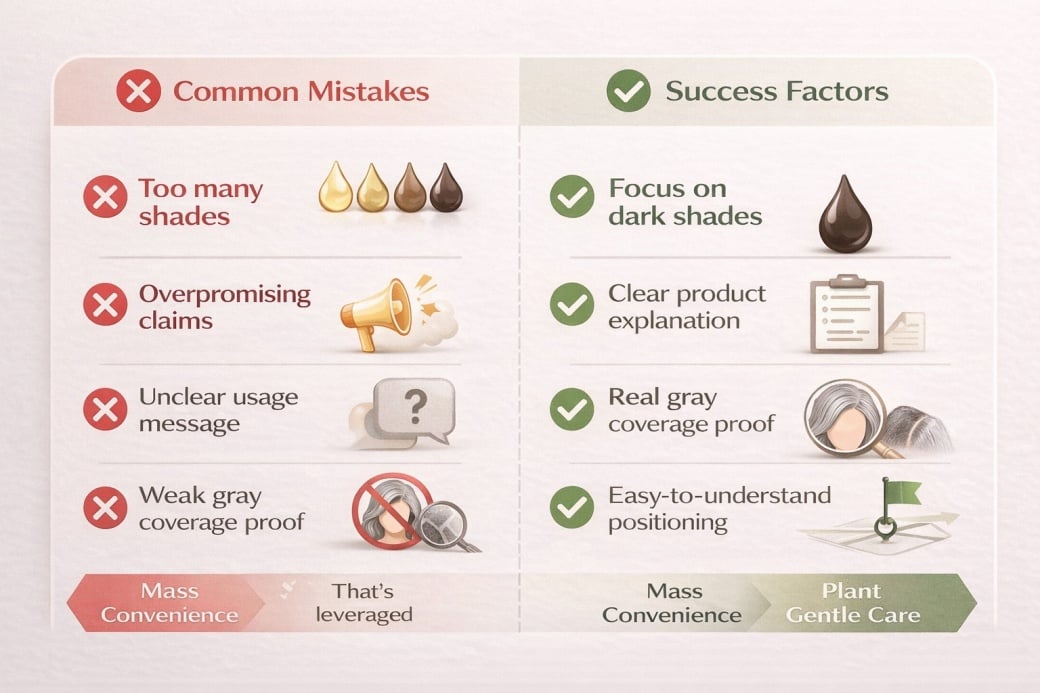
De eerste bestelling kan plaatsvinden omdat het formaat aantrekkelijk is. De tweede bestelling vindt plaats omdat het product een echt probleem oplost.
Een serieuze koper zou moeten vragen:
Dit werkte daadwerkelijk: houd de eerste lancering praktisch. Sterke donkere tinten. Duidelijke instructies. Een geloofwaardige boodschap over grijstintbedekking. Een formuleverhaal dat de positionering ondersteunt, zonder dat de verpakking overvol lijkt.
Watercress Bubble Dye Shampoo trekt aandacht omdat het gemak, zichtbaar voordeel en een zachtere productboodschap combineert op een manier die eenvoudig is voor kopers om te begrijpen en eenvoudig is voor kanalen om te verkopen.
Toch moet elke koper de juiste beslissing nemen, afhankelijk van of het product past bij uw assortiment, uw klant en uw leveringsmodel.
Voor sommige merken zal het het beste functioneren als een op gemak gericht product voor grijstintbedekking. Voor anderen zal het meer zinvol zijn als een botanische of zachter gepositioneerde uitbreiding.
Dat is meestal het verschil tussen een product dat aandacht krijgt en een product dat blijft verkopen.