×
×
Developing a private label body lotion should start with a clear product concept, not a long ingredient list.
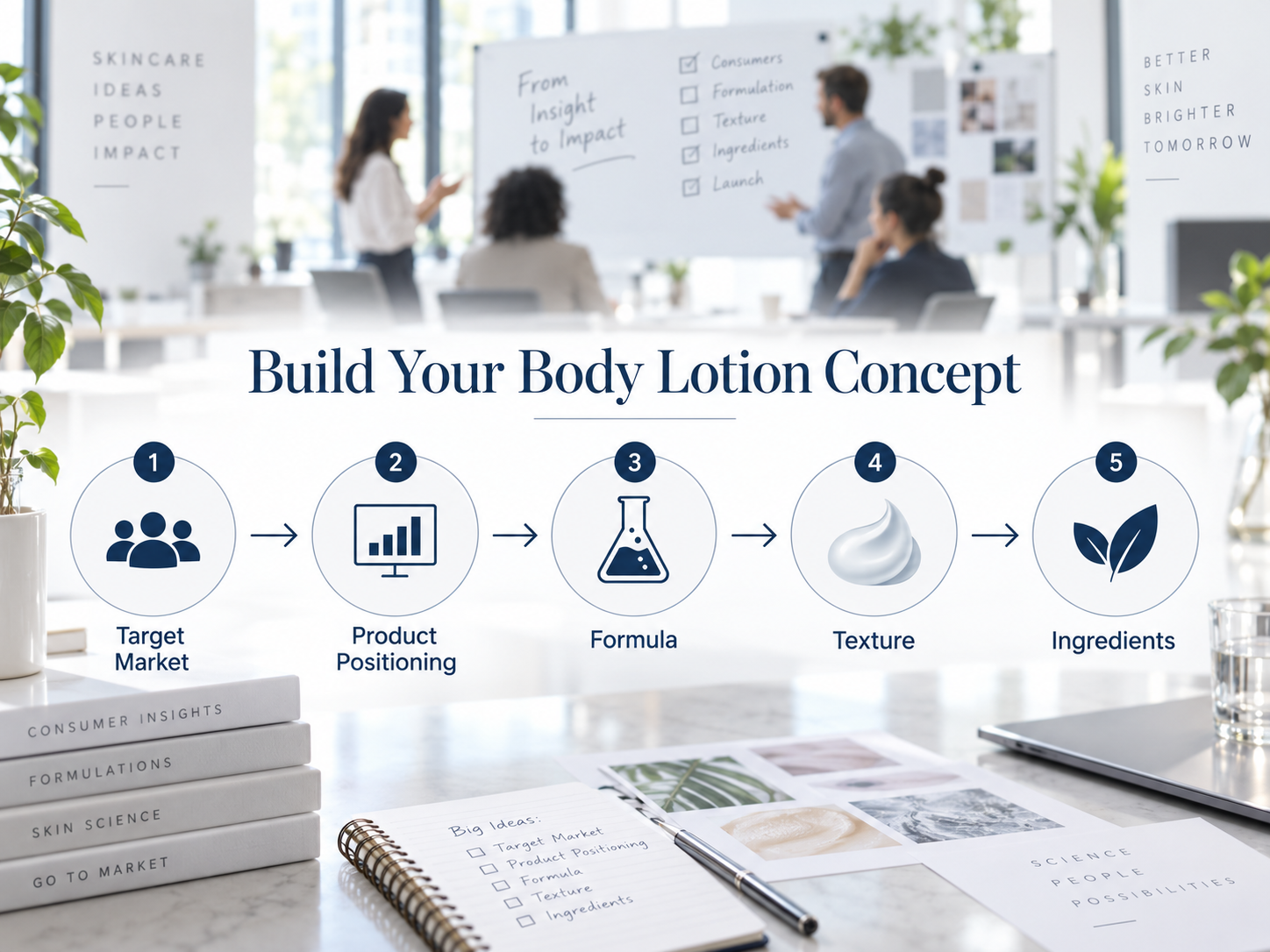
Before discussing packaging or production, buyers should first define who the product is for, what it should do and how it should feel on the skin. These decisions determine the formula route, texture and ingredient direction.
A practical development process starts with five questions:
private label body lotion
1. Define the Market and Product Positioning
The first decision is not which ingredient to use. It is what kind of Body Lotion you want to develop.
Start with a few basic inputs:
These inputs give the formulation team a clear direction.
For example, a daily lotion for a warm market may need a lighter skin feel, while a product positioned for dry skin may require a richer texture.
You do not need to repeat a full market analysis during formula development. The important point is to translate market information into a clear product brief.
body lotion for different markets and sales channels
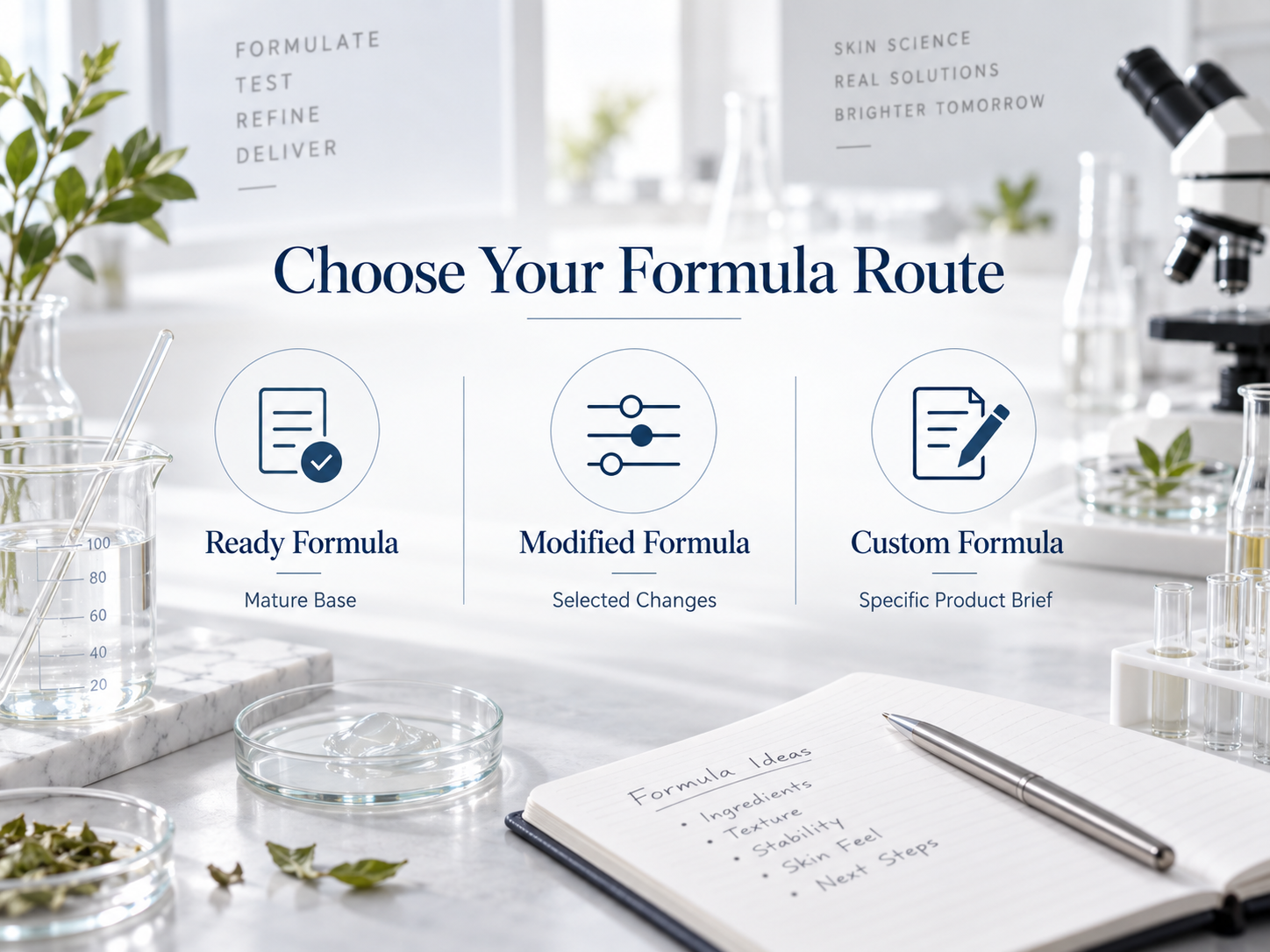
A ready formula is useful when the main product concept is already available and the buyer does not need extensive formulation changes.
Differentiation can then come from the overall product positioning, fragrance or brand presentation.
A modified formula starts with an existing base and changes selected elements such as:
This works well when the buyer knows what needs to change but does not require a completely new formula.
A custom formula is more suitable when the brand has clear requirements for:
The right route depends on the level of differentiation the product actually needs.
Texture strongly affects how consumers understand and use a Body Lotion.
Instead of offering every possible texture, choose one that supports the product position.
A lightweight texture works well when the product should spread easily and leave a lighter after-feel.
A standard lotion offers a balance between moisture and everyday usability. It is often suitable for broad daily-care positioning.
A richer texture can support nourishing or dry-skin positioning.
The key is not to make the formula thick simply to appear more premium. Texture should match the intended consumer and use case.
Ingredients should support the product concept rather than define it by themselves.
A simpler approach is:
Main Product Need → Primary Ingredient Direction → Supporting Ingredients
Common ingredient directions may include:
Possible directions may include:
Common concepts include:
Possible directions include:
The final ingredient choice should depend on the actual formula, target market and intended cosmetic claims.
Adding more hero ingredients does not automatically create a stronger product.
For example, combining many unrelated ingredients can make the Body Lotion harder for distributors, retailers and consumers to understand.
A clearer structure is usually more useful:
Brightening Body Lotion
→ Main brightening direction
→ Moisturizing support
or:
Dry-Skin Body Lotion
→ Barrier / nourishing direction
→ Humectant support
This creates a product story that is easier to communicate.
The product becomes easier to understand when all three elements point in the same direction.
This table is more useful than treating formula, texture and ingredients as three separate decisions.
For example, a product positioned as lightweight daily care should not have a very heavy skin feel simply because the formula contains fashionable ingredients.
Likewise, a nourishing lotion should provide a texture and ingredient story that support the same use case.
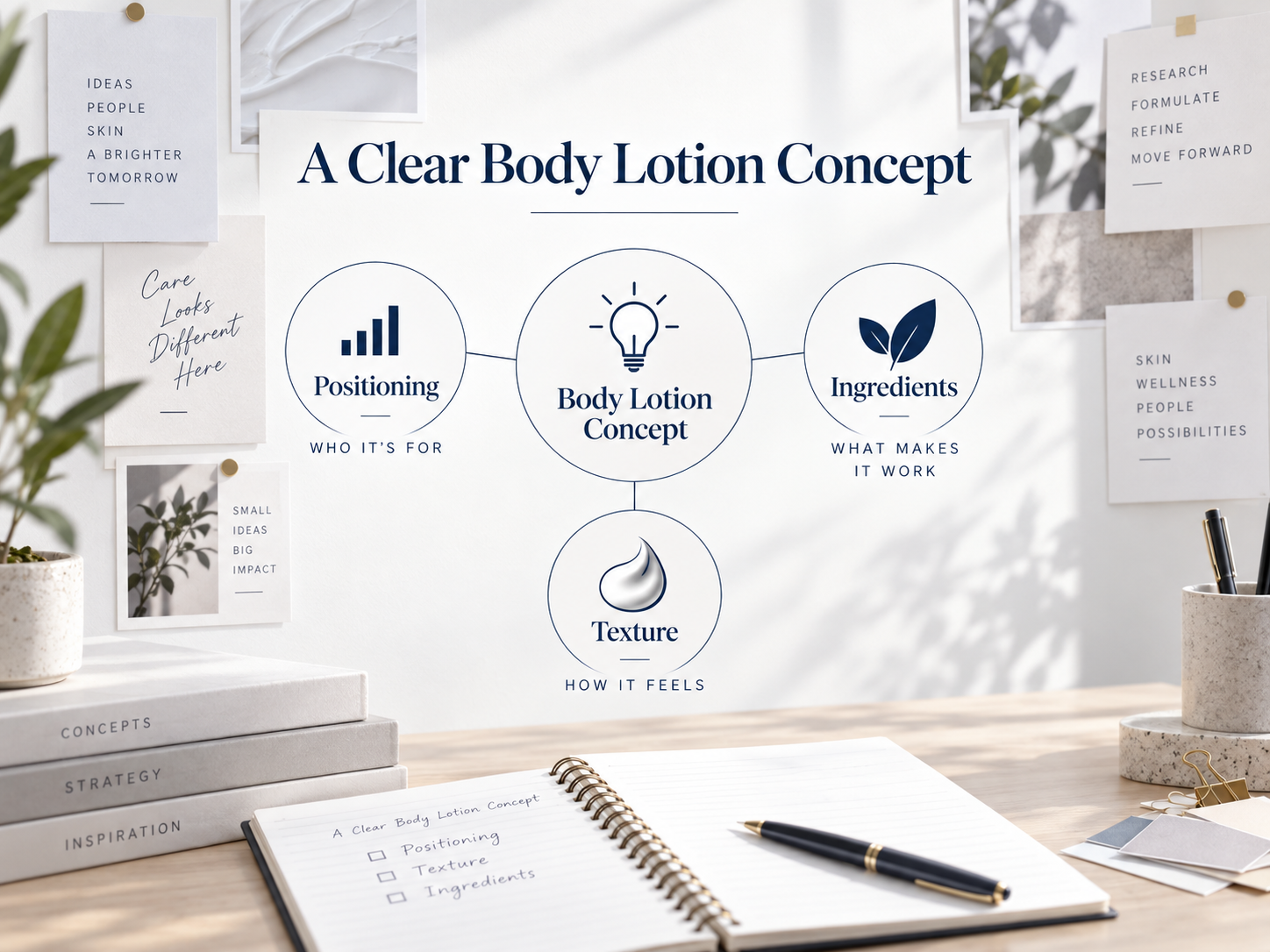
Before asking a manufacturer to develop a formula, prepare a concise product brief.
A clear brief is more useful than a request such as:
“I want a premium moisturizing lotion.”
A stronger development request would state the target market, main function, preferred texture and ingredient direction.
This gives the manufacturer enough information to begin formula discussion without mixing the project with later decisions about packaging, quotation or bulk production.
A private label Body Lotion project becomes easier to manage when the product itself is clearly defined first.
The key decisions are:
Target Market + Product Positioning + Formula Route + Texture + Ingredient Direction
Once these are confirmed, the project can move to the next decision: choosing packaging that fits the formula and brand positioning.
If you are developing a Body Lotion for your brand, contact us with your target country or region, sales channel and product concept. We can discuss suitable formula, texture and ingredient directions for your project.
 EN
EN



 Hot News