EN


Disunie Double Essence Serum Series: Unlocking the journey of luxurious skin transformation
2025/04/17
Spicule skincare is an emerging concept in the skincare market. It refers to topical cosmetic products formulated with tiny needle-like structures derived from natural sponges, commonly known as sponge spicules.
Unlike conventional skincare ingredients, sponge spicules interact with the skin through their physical structure. Their potential role in skin renewal and topical ingredient delivery has attracted attention from skincare brands and product developers.
In this article, spicule skincare specifically refers to topical cosmetic products containing sponge-derived spicules, rather than professional microneedling devices or dissolving microneedle patches.
For distributors, wholesalers, and skincare brand owners, understanding this technology is important before considering these products for a portfolio. Raw material quality, formula compatibility, product safety, and market positioning all need to be evaluated.
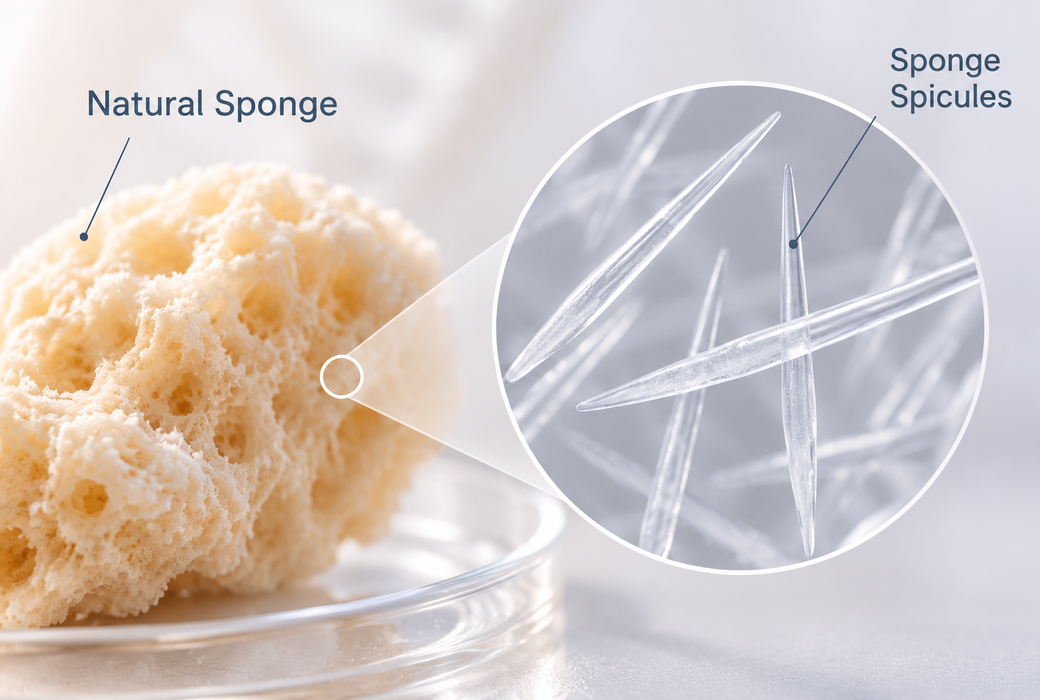
Spicules are microscopic needle-like structures found in certain freshwater and marine sponges. Some sponge spicules used in cosmetic raw materials are primarily composed of silica and have a rigid, elongated structure.
After extraction and processing, sponge-derived materials can be incorporated into topical skincare formulations.
In the cosmetic ingredient market, related materials may appear under different names:
These terms do not necessarily describe identical materials.
Hydrolyzed Sponge is an INCI name used for certain sponge-derived cosmetic ingredients. However, an INCI name alone does not confirm the size, shape, purity, or intact spicule content of a raw material.
Commercial names such as Sponge Microcrystals and Bio-Microcrystals may also vary between suppliers. Buyers should check the actual INCI name, technical specifications, and raw material documentation before sourcing.
Unlike conventional chemical exfoliants or physical scrubs, spicule skincare relies on the physical structure of these microscopic materials to interact with the skin surface.
The main feature of spicule skincare is its mechanical interaction with the skin.
When a spicule-containing formula is applied, the tiny structures come into contact with the outer skin barrier. Depending on their characteristics and formulation, they may create microscopic disruptions in the skin surface.
Researchers have investigated whether this interaction can support the delivery of active ingredients through the skin.
For example, a 2017 study published in Molecular Pharmaceutics examined marine sponge spicules as a delivery system for hydrophilic biomacromolecules. The research included porcine skin models and animal experiments.
A 2022 study published in the Journal of Cosmetic Dermatology investigated natural sponge spicules combined with a liposome-based delivery system. The researchers evaluated ingredient delivery using porcine skin samples.
These studies demonstrate scientific interest in spicule-based delivery systems. However, they do not establish that all commercial spicule skincare products deliver active ingredients into deeper skin layers or produce the same results.
Actual product performance depends on the raw material, formulation, concentration, and finished-product testing.
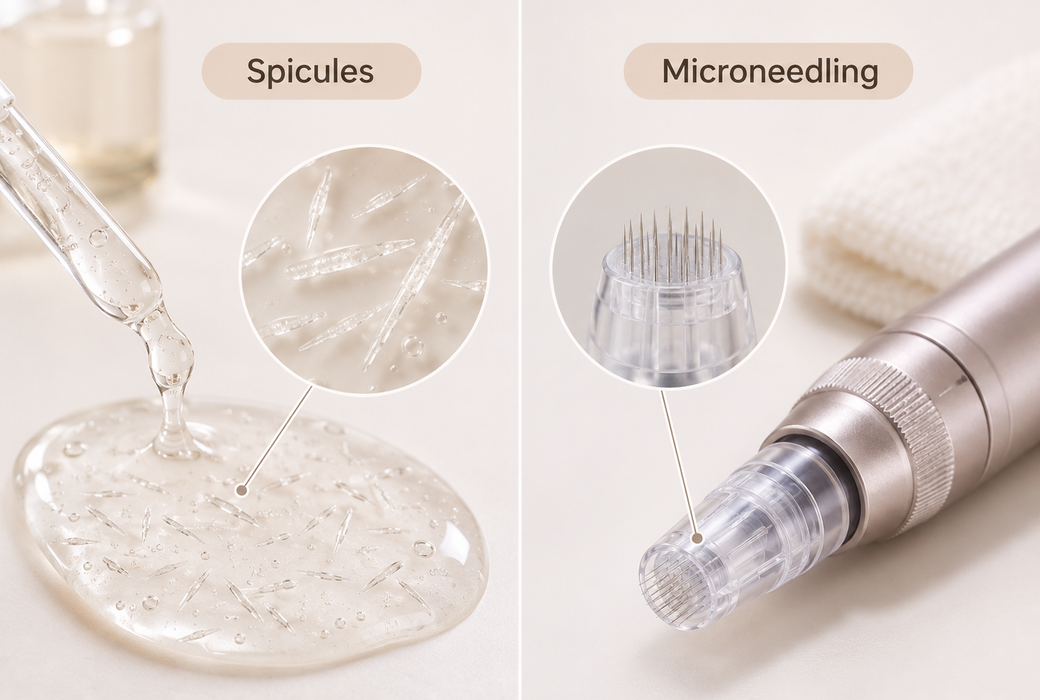
Spicule skincare and traditional microneedling are sometimes confused because both involve needle-like structures. However, they have different forms and application methods.
| Comparison | Spicule Skincare | Microneedling Devices |
|---|---|---|
| Basic form | Sponge-derived structures in topical formulas | Needles attached to devices |
| Application | Applied as skincare products | Used to mechanically puncture the skin |
| Main mechanism | Physical interaction with the skin barrier | Controlled mechanical penetration |
| Product format | Serums, ampoules, creams, and gels | Microneedling pens and rollers |
| Key considerations | Formula quality and skin compatibility | Device safety and intended-use requirements |
Spicule skincare is also different from dissolving microneedle patches. These patches typically use dissolvable materials, such as polymers or hyaluronic acid, to form microscopic needles that dissolve after application.
Although sponge spicules are sometimes described as topical microneedles, a spicule-containing skincare product is not equivalent to a professional microneedling device or a dissolving microneedle patch.
For distributors, understanding these distinctions is important when evaluating product descriptions, usage instructions, and marketing claims.
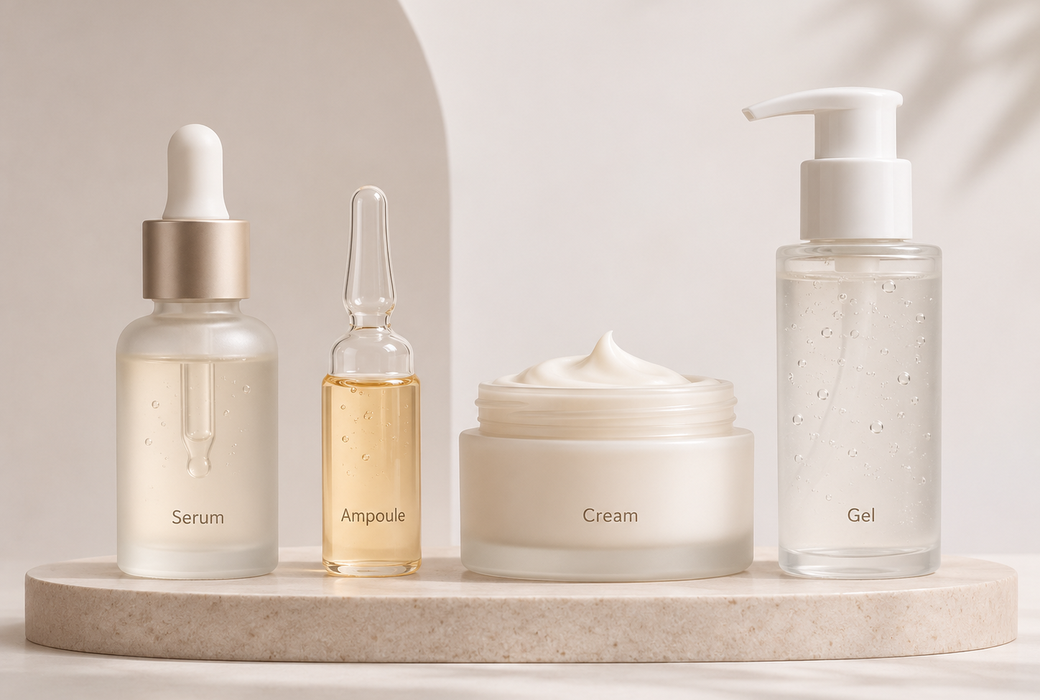
Spicules can be incorporated into different topical skincare formats. Each format has its own formulation and product positioning considerations.
Serums are commonly used for concentrated skincare formulations. They can combine spicules with ingredients such as hyaluronic acid, peptides, or other skin-conditioning ingredients, depending on formula compatibility.
Ampoules are often positioned as targeted skincare treatments. Their packaging and concentrated product concept can support a more specialized product positioning.
Cream formulations combine spicules with an emulsion base. Formulation development needs to consider spicule distribution, texture, and product stability.
Gel formulations offer another product format. Their viscosity and suspension properties need to be evaluated to maintain an appropriate and consistent product texture.
For distributors, the choice of product format should depend on the target market, consumer preferences, price positioning, and available product information rather than the ingredient name alone.
When sourcing spicule skincare, buyers should prioritize raw material specifications, formula compatibility, finished-product safety, stability testing, and regulatory compliance rather than relying on ingredient claims alone.
Five areas deserve particular attention.
Check the raw material source, INCI name, and technical specifications.
Important information includes:
Buyers should ask suppliers to clarify what material is actually used rather than relying only on commercial terms such as microcrystals or bio-needles.
Spicules need to be properly incorporated into the finished formula.
Buyers should consider:
A formula that appears uniform during initial production may still develop settling or uneven distribution during storage.
Because spicules interact physically with the skin barrier, product safety requires particular attention.
Buyers should request relevant finished-product safety assessments, including irritation and skin compatibility testing where appropriate.
A tingling sensation during application does not automatically indicate better performance or product effectiveness.
Clear usage instructions and appropriate safety information should also be provided.
Finished products should be evaluated under appropriate storage conditions.
Important checks include:
These checks help identify potential changes in texture, separation, or product quality before commercial distribution.
Before placing a bulk order, buyers should request relevant product and raw material documents.
These may include:
Importers and brand owners should also confirm ingredient requirements, product classification, labeling rules, and permitted marketing claims in their destination markets.
Claims involving deep skin penetration, collagen production, skin regeneration, or clinical results should be supported by appropriate evidence for the actual finished product.
The commercial potential of spicule skincare depends on product positioning, consumer understanding, and sales channel requirements.
Before introducing these products, distributors should consider three factors.
Spicule skincare is less familiar to many consumers than conventional serums or creams. Clear product descriptions should explain what spicules are, how they interact with the skin, and how the product differs from traditional skincare.
Different channels require different product information and support.
Products intended for professional channels should have clearly defined usage instructions and must not imply that cosmetic products replace professional procedures.
A new ingredient alone does not guarantee commercial success.
Buyers should consider whether the product has a clear selling point, whether consumers can understand its purpose, and whether its positioning fits the existing skincare portfolio.
A suitable product combination and clear market positioning can be more valuable than simply adding another trending ingredient.
Spicule skincare offers another direction for skincare product development through its unique physical structure and potential role in topical ingredient delivery.
However, distributors and skincare brands should evaluate raw material quality, formula compatibility, product safety, stability, and regulatory requirements before sourcing these products.
Understanding the technology is the first step. Choosing a suitable formula and matching it with the right market and sales channel are equally important when building a skincare product portfolio.
For more skincare product options and potential supply partnerships, explore the Livepro skincare product range.
Research References